This post draws extensively from an article published by
Semana Sostenible
In the southern Putumayo Department, which borders Peru and
Ecuador in the Colombian Amazon, indigenous communities have denounced illegal
invasions and deforestation of their lands by cattle ranchers.
According to the latest issue of Semana Sostenible, an
environmental quarterly Colombian magazine, the indigenous communities Nukanchiruna,
Chaibajú and Uaima have demanded, so far without success, that ranchers remove
their cattle from their territories.
At Nukanchiruna, residents of the kichwa ethnicity allege
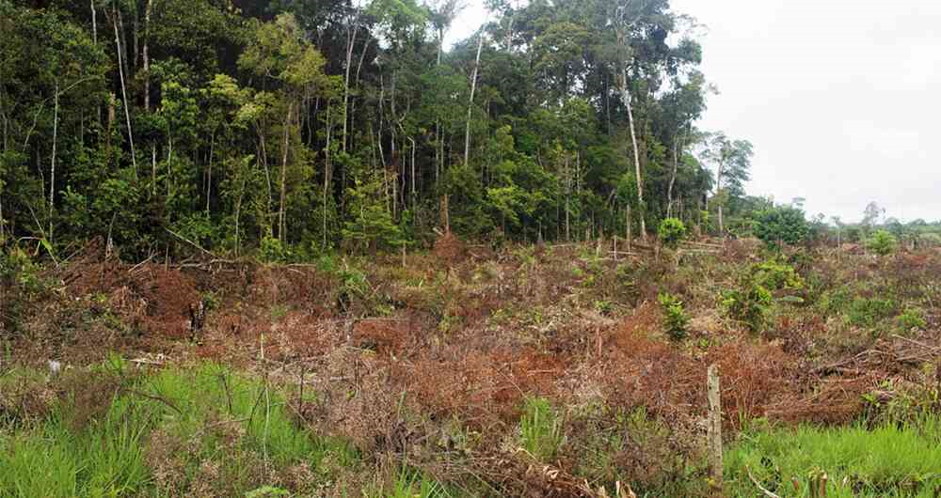
that ranchers have occupied and cleared 170 hectares of forests on their land
in recent years.
The communities have expressed concern that if ranches
continue to advance into the reservation their water sources and livelihoods
will be affected.
They claim that even when ranches, several of which extend
for more than 300 ha, do not encroach on their lands, cattle are allowed to
move around and destroy their cassava and plantain cultivations.
The communities have been settled within the Alto Predio
Putumayo indigenous reservation since 2007 following an agreement with INCODER
(Colombian Institute for Rural Development, a now extinct government body).
The Alto Predio Putumayo reservation, Colombia’s largest
with an area of 5.5 million ha, covers the municipality of Puerto Leguízamo,
one of eight municipalities in Colombia that concentrate over 50% of
deforestation in the country.
According to Semana Sostenible, Corpoamazonia, a government
body tasked with promoting the sustainable development of Colombia’s southern
Amazon region, has been investigating cases of illegal occupation of indigenous
territories by ranchers.
Ranchers defend themselves by claiming that they have legal
titles to the lands and that it is the government’s responsibility to manage
land conflicts in the region. They have also alleged that they’ve only
appropriated areas that had been abandoned.
Colombia’s forests have made headlines in recent months due
to increases of over 40 percent in illegal deforestation rates following the
2016 peace agreement between the FARC guerilla and the government.
Conservationists have claimed that the guerilla’s demobilisation and an absence
of state presence in several areas have led to land grabbers and organised
crime moving into protected areas and illegally clearing forests to sell the
land to ranchers, farmers and miners.