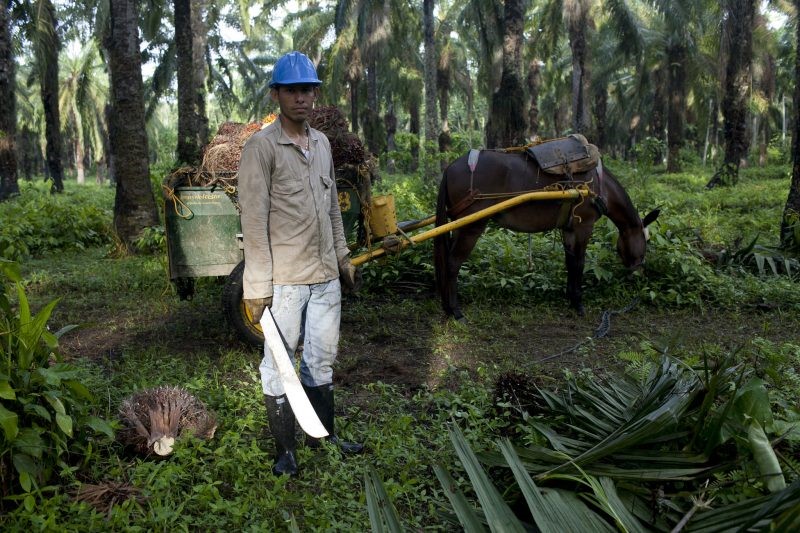
A palm oil worker in Minas, Colombia
Colombia’s forests are facing an uncertain future as the
disbandment of guerrilla group FARC opens previous no-go areas to business and
agriculture.
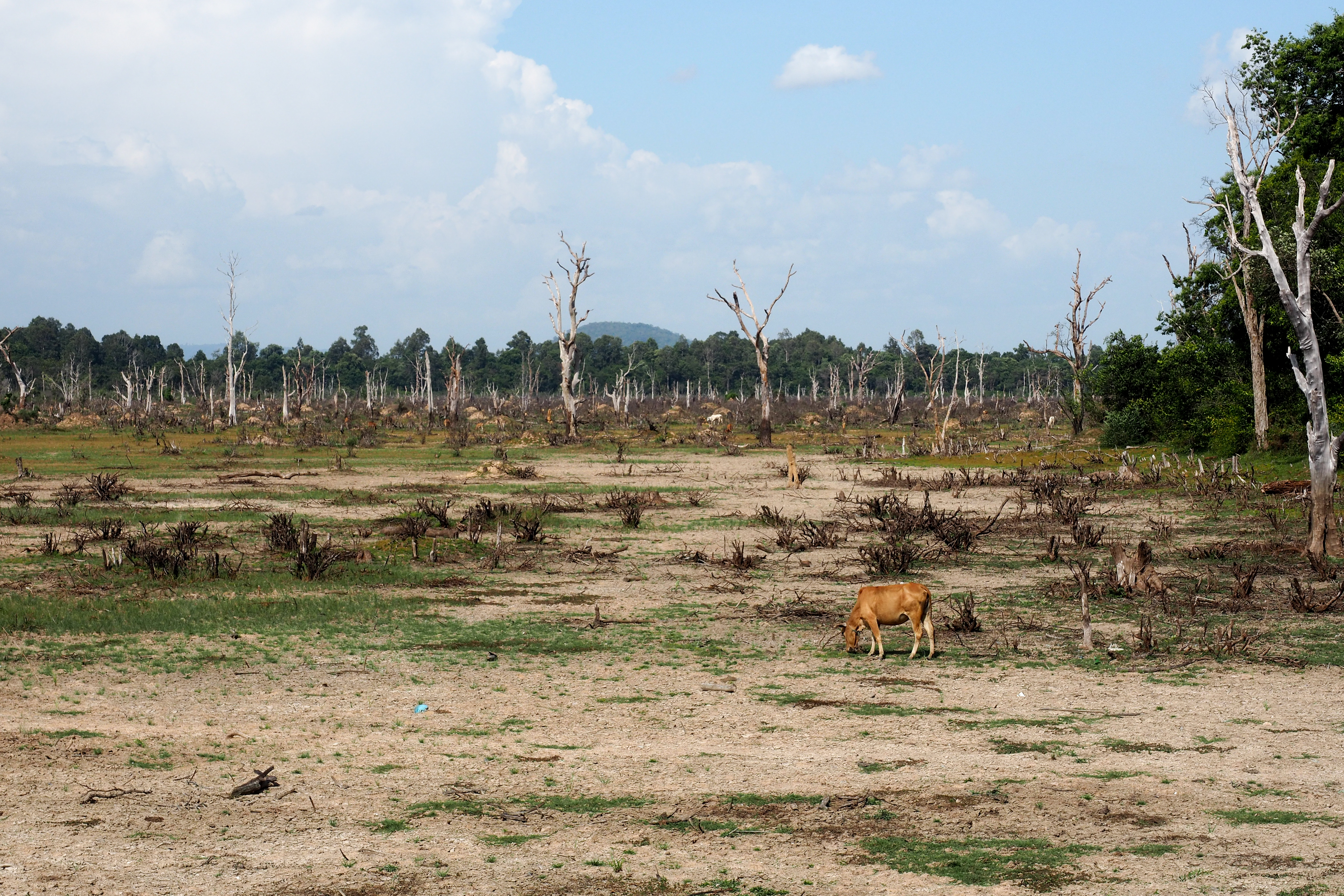
Deforestation increased by 44% in 2016, with most illegal clearances concentrated in remote rainforest areas previously controlled by the guerrilla fighters.
Elsewhere, land conflict has
already broken
out in former FARC strongholds.
“We told the government that it would need to establish
control in these areas quickly, but it hasn’t,” Susana Muhamad, an activist who
has studied the environmental risks of the demobilisation, told
the Guardian. “It’s like the wild west now, a land rush.”
Article one of the peace accords guarantees agrarian reform, promising that 7 million hectares of land will be redistributed to its rightful owners. But authorities have not specified what this will mean in practice.
In some areas, indigenous groups have seized the opportunity to reclaim
land that falls within their ancestral territory.
In the Cauca Valley, for example, Nasa Indians have cut and burnt swathes of sugarcane, before erecting camps and seeding traditional crops.
Two Nasa activists have been killed in the past
year, including 17-year-old Daniel Felipe Castro, allegedly shot by police
while clearing sugarcane on a plantation owned by billionaire Carlos Ardila Lulle.
Observers warn that conflict and deforestation could be exacerbated by a new wave of palm oil development.
Colombia is currently the largest palm oil producer in the Americas.
A 2016 report from the
government-run National
Centre of Historical Memory (CNMH) concluded that “in at least five
departments there exists a direct relationship between displacement, the
abandonment of smallholdings, and the cultivation of palm oil.”
In 2015, paramilitary leaders with links to the oil palm
company Poligrow Colombia called
for the assassination of the environmental activist William Aljure,
deeming him “a threat to the business” of palm oil after he spoke out
against the forced displacement of farmers and indigenous communities.
“Where you had heavy FARC presence in the past, now they’ve
demobilised it’s going to open the land for possible palm oil use,” Daniel
Hawkins, director of investigations at the National Labour School of
Colombia, told
MongaBay.
Advocacy
organisations have warned that Colombia is currently facing “a
grave security crisis” for human rights defenders and indigenous
leaders. More
than 120 have been killed so far in 2017, according to activists.