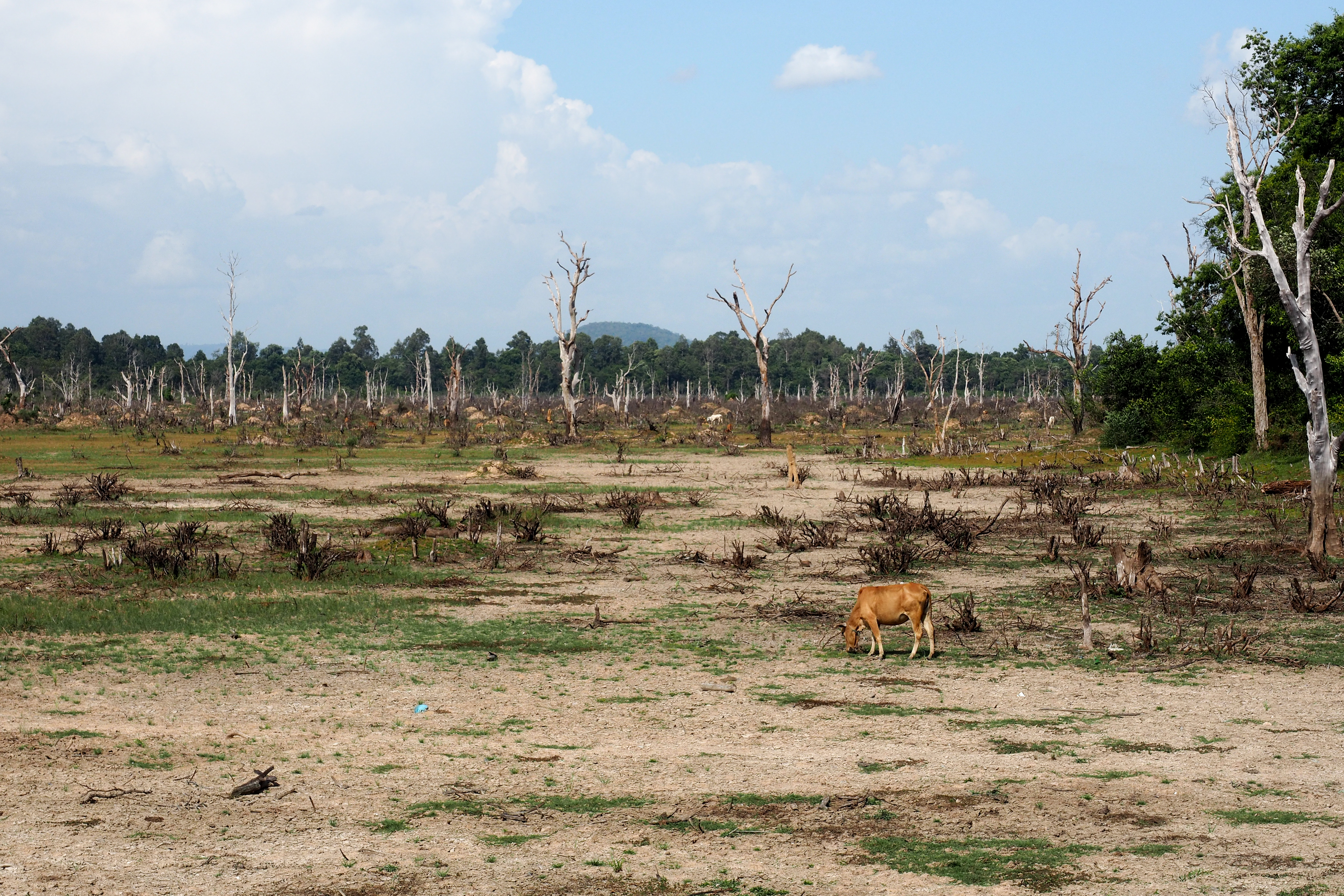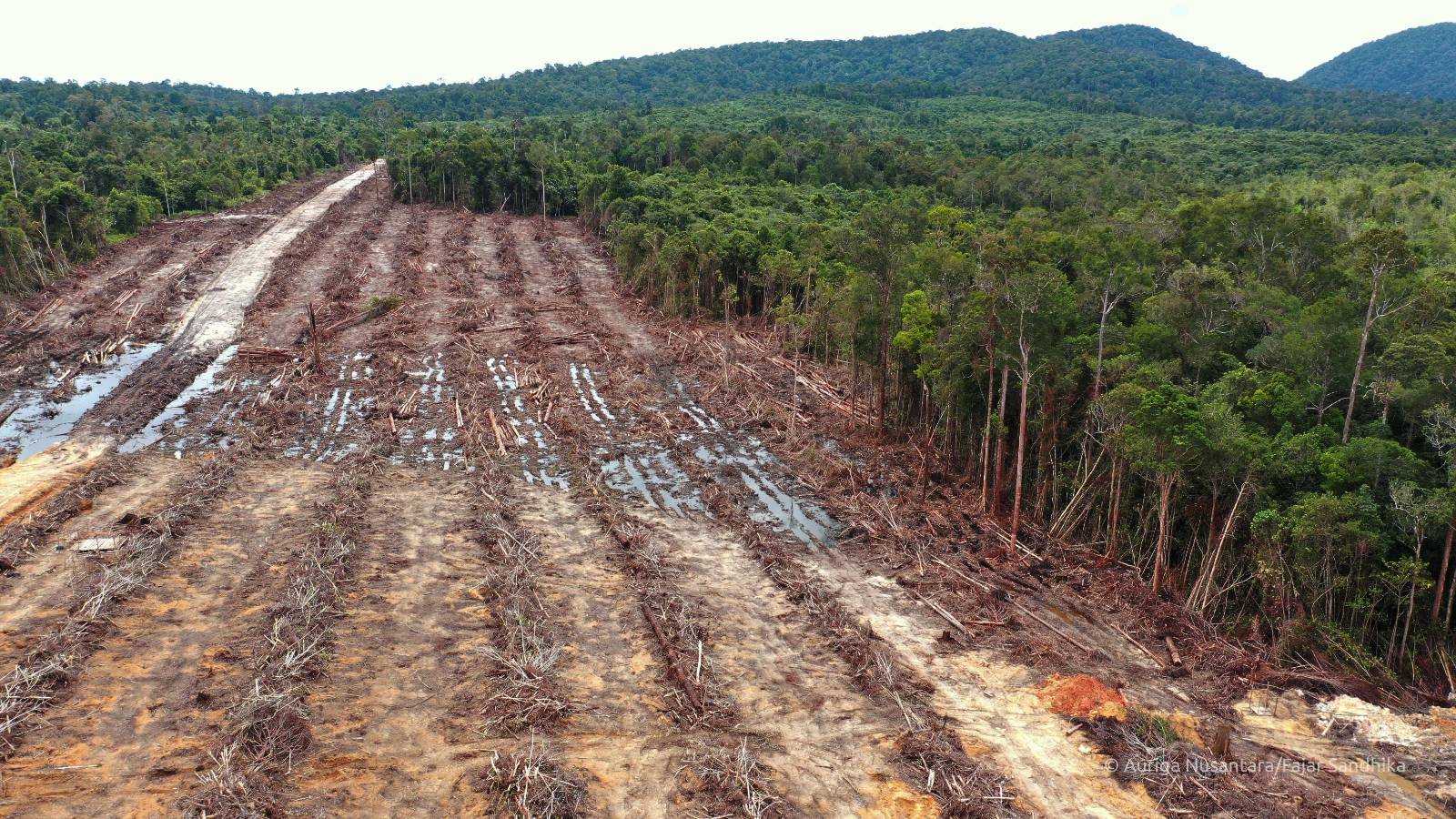
Newly cleared forest in the concession of PT Mayawana Persada, West Kalimantan, 2023
Eighteen leading environmental groups from Indonesia, Europe and the United States have condemned the granting of a ‘sustainable’ label to two Indonesian timber companies responsible for more deforestation in the country than any others this decade.
In an open letter published today, the 18 organisations call on the Programme for the Endorsement of Forest Certification (PEFC), one of the world’s most recognisable ‘green’ labels, to revoke sustainable forest management certification granted to PT Mayawana Persada and PT Industrial Forest Plantation, which have together cleared more than 40,000 hectares (ha) of precious tropical forest in Borneo since 2021.
The list of signatories includes 11 Indonesian civil society groups active in forest protection and support for Indigenous rights in Borneo, as well as international environmental NGOs including Greenpeace, Friends of the Earth, Mighty Earth, Rainforest Action Network, Environmental Paper Network, Fern and Earthsight.
Signatories of the letter calling on PEFC to revoke sustainable forest management certification granted to PT Mayawana Persada and PT Industrial Forest Plantation
The letter calls on PEFC to amend its policies to no longer allow companies responsible for extensive recent deforestation to benefit from the green image the certification affords. It condemns the scheme’s current approach for greenwashing of companies responsible for the worst deforestation in Indonesia’s plantation sector this decade.
The environmental groups argue that this undermines the purpose of sustainability certification, and risks misleading customers who assume the PEFC label excludes suppliers complicit in environmental harm.
The two worst deforesters
The timber plantation company PT Mayawana Persada cleared more than 34,000ha of natural forest in West Kalimantan, Indonesian Borneo, between 2021 and 2024, making it the top deforester in the country in this period. Around two thirds of the destroyed forest was on peat, which is particularly damaging for our climate as it turns a carbon ‘sink’ into a major emitter.
Deforestation by PT Mayawana Persada has triggered ongoing conflict between the company and the Indigenous Dayak community who live in the area. They say the company has cleared sacred forests, as well as agroforestry sites used as an important source of income. The company has also destroyed habitat for the critically endangered Bornean orangutan.
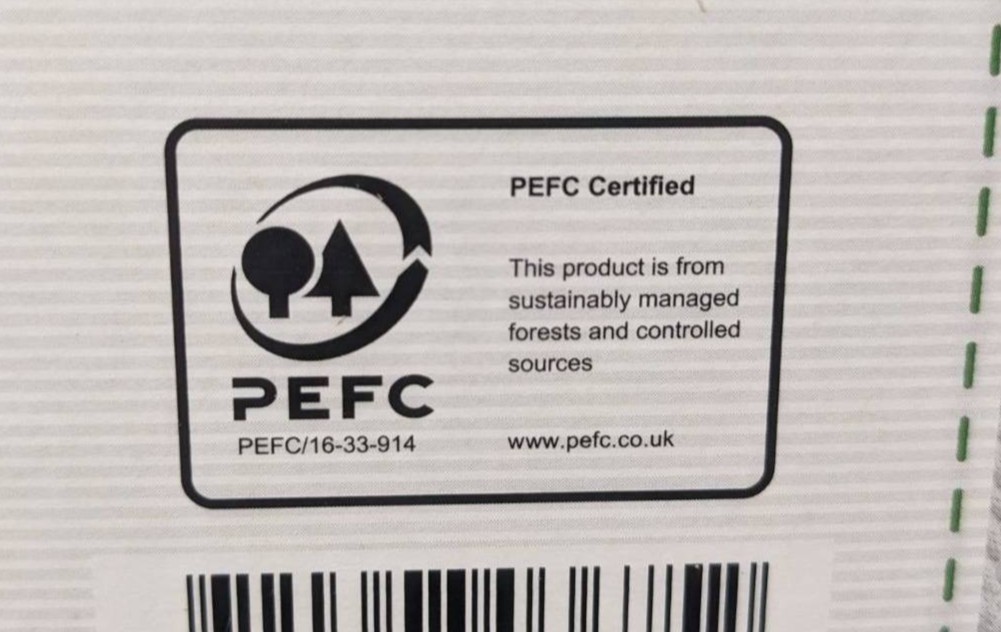
The PEFC logo seen on paper packaging in the UK
The case has attracted extensive media attention both in Indonesia and internationally, including a front-page story in the New York Times in August 2025. Earthsight, Auriga Nusantara and Mighty Earth have exposed how wood produced through deforestation by PT Mayawana Persada was sold to US companies for use in the production of recreational vehicles (RVs).
In March 2024, Indonesia’s Ministry of Forestry ordered PT Mayawana Persada to halt its activities due to the environmental damage it was causing. The company reportedly continued to plant fast-growing acacia on the recently deforested land, in apparent violation of the government order.
Despite this, PT Mayawana Persada was granted PEFC forest management certification in October 2025.
PT Industrial Forest Plantation was the second-worst deforester in Indonesia’s plantation sector between 2021 and 2024, clearing more than 14,000ha of natural forest in this period. The company’s concession is located within a stronghold for Bornean orangutans, and its activities have led to ongoing conflict with local communities in the area, resulting in confrontations with police.
Earthsight and Auriga Nusantara have previously raised concerns about PEFC certification that was granted to PT Industrial Forest Plantation in November 2024.
Orangutans eating while hanging from a tree in Borneo © Images freely available on Open Planet
Questionable standards
As a global umbrella organisation, PEFC International does not assess or issue individual sustainability certificates itself. Instead, it works with national and regional-level certification schemes, whose standards and processes have been judged to align with PEFC’s core standards. The PEFC-endorsed scheme in Indonesia is the Indonesian Forestry Certification Cooperation (IFCC).
In turn, various auditing companies are responsible for assessing and granting individual certifications under IFCC rules. Wood products produced by certified companies can then be traded internationally with the widely recognisable PEFC label, featuring two trees.
PEFC’s benchmark standards for sustainable forest management certification state that “forest conversion to agricultural use” … [and] human-induced forest degradation shall not occur,” including the replacing of natural forest with plantation forest. The standards state that timber plantations grown on land that was deforested after 31 December 2010 may not be certified.
Both PT Mayawana Persada and PT Industrial Forest Plantation were audited by the certification company PT Mutuagung Lestari Tbk, also known as Mutu International. In publicly available audit reports, Mutu International acknowledged that both companies have cleared large areas of natural forest this decade. The audit report for PT Industrial Forest Plantation notes that the company even continued to deforest after August 2023, when it committed to complying with IFCC standards which prohibit clearance of natural forest.
Yet, under current PEFC rules, these companies can be certified as ‘sustainable’ despite destroying vast areas of natural forest in recent years because the certification applies only to parts of their concessions, and excludes areas which have been deforested since 2010. PEFC refers to this as ‘scope-based certification’.
Representatives of PEFC International met with Earthsight on 11 February 2026 to discuss the issue. In a written response to the NGO letter, PEFC International said: “We acknowledge that, in certain contexts, the scope-based certification model may produce outcomes that, while technically compliant with current rules, do not fully align with PEFC’s and stakeholder expectations that certificate holders manage their forests consistent with sustainable forest management principles within their entire concession, including land-use change outside certified areas."
Greenwashing environmental destruction
In their letter, the environmental groups argue that this approach amounts to greenwashing of the most environmentally and socially destructive companies in the timber sector.
This system, they argue, creates almost no incentive for a timber company to preserve valuable natural forest in its concession. It can instead clear as much forest as it is legally permitted to, sell the resulting timber, and then obtain sustainable forest management certification under the PEFC system once it has finished clearing forest.
As the NGO letter argues, the PEFC’s approach – which allows such companies to almost immediately start benefitting from a green image without any requirement to restore destroyed forest or redress social harms – masks the reality of their activities, allows them to evade the consequences of their actions, and misleads consumers. This is greenwashing.
In a December 2025 article, PEFC’s Head of Advocacy argued that PEFC certification “draws a line” under “unacceptable practices,” and refers to the recent activities of such companies as “legacy deforestation.” Yet far from ‘legacy’ issues, the recent actions of PT Mayawana Persada and PT Industrial Forest Plantation have triggered ongoing and unresolved conflicts with local and Indigenous communities, while deforested land and drained peat continue to emit vast amounts of carbon.
A 2025 investigation by Earthsight and Auriga Nusantara details how PT Industrial Forest Plantation was selling wood produced through the bulldozing of forest in its concession in 2024. The company was therefore making money from deforestation in the very same year it was granted ‘sustainable’ certification under PEFC’s rules.
What’s more, the letter argues, allowing partial certification of a concession creates a very significant risk of mixing of wood from certified and non-certified areas. This in turn creates a major risk for EU importers of PEFC-certified wood, who may be exposed to products that are not compliant with the EU Deforestation Regulation (EUDR). From December 2026, the EUDR will ban the import of timber linked to deforestation. Non-compliant importers could face significant penalties under the law.
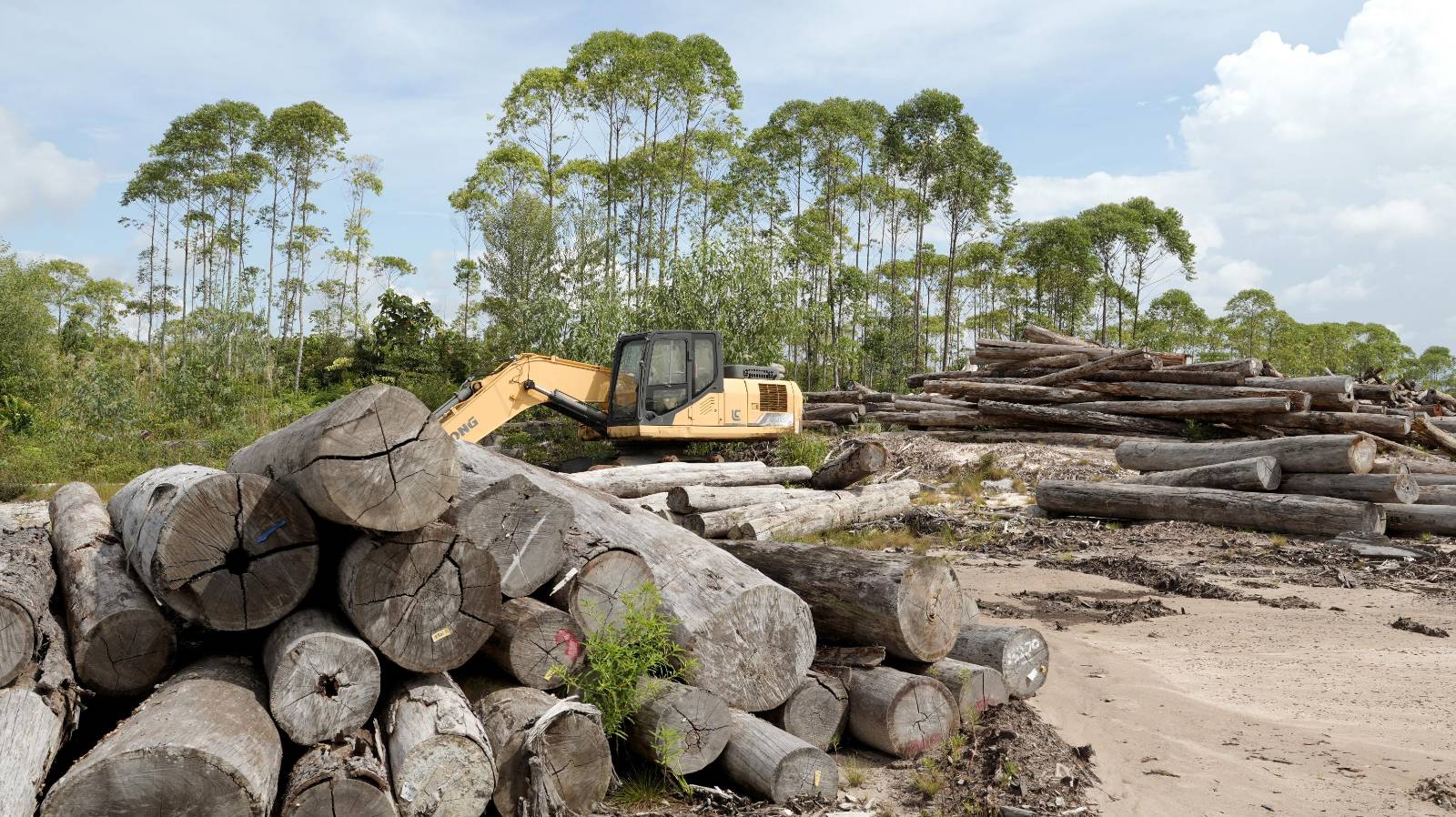
Piles of logs from deforestation in the concession of PT Industrial Forest Plantation, Central Kalimantan, November 2024
Opportunity for change
PEFC’s system requires periodic reviews of the national-level certification schemes it endorses. A review of IFCC in Indonesia was due to commence on 25 January 2026.
As well as revoking the certificates of PT Mayawana Persada and PT Industrial Forest Plantation, the NGO open letter urges PEFC International to amend its standards to exclude a company from certification if it or any business within its corporate group has cleared natural forest since 2010. The signatories also call on PEFC to suspend its endorsement of IFCC until its standards reflect this.
Such an approach would bring PEFC closer in line with the Forest Stewardship Council (FSC), the world’s largest timber certification scheme, whose ‘Policy for Association’ ensures a company cannot gain its sustainable seal of approval if a related business has engaged in deforestation or other activities that violate its standards.
PEFC International told Earthsight that a high-level revision of PEFC standards is underway, which could consider the issue of partial certification. In their written response to the NGOs’ recommendations, they said: “Where substantiated evidence indicates that scope-based certification is being applied in a way that undermines PEFC integrity requirements or stakeholder expectations, PEFC is prepared to consider interim governance measures in relevant jurisdictions pending completion of the revision process.”
Read the full letter here.
Read PEFC’s full response here.