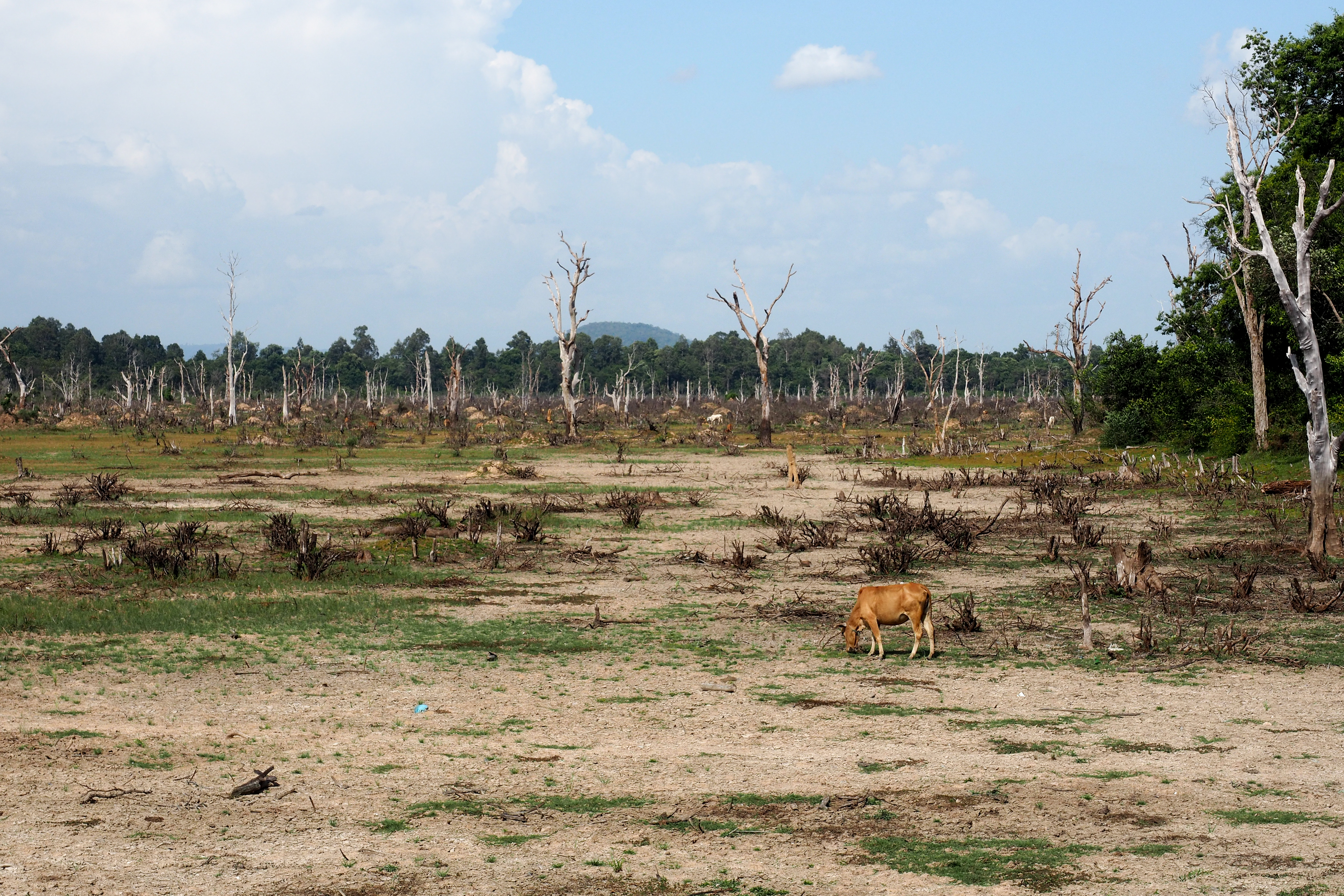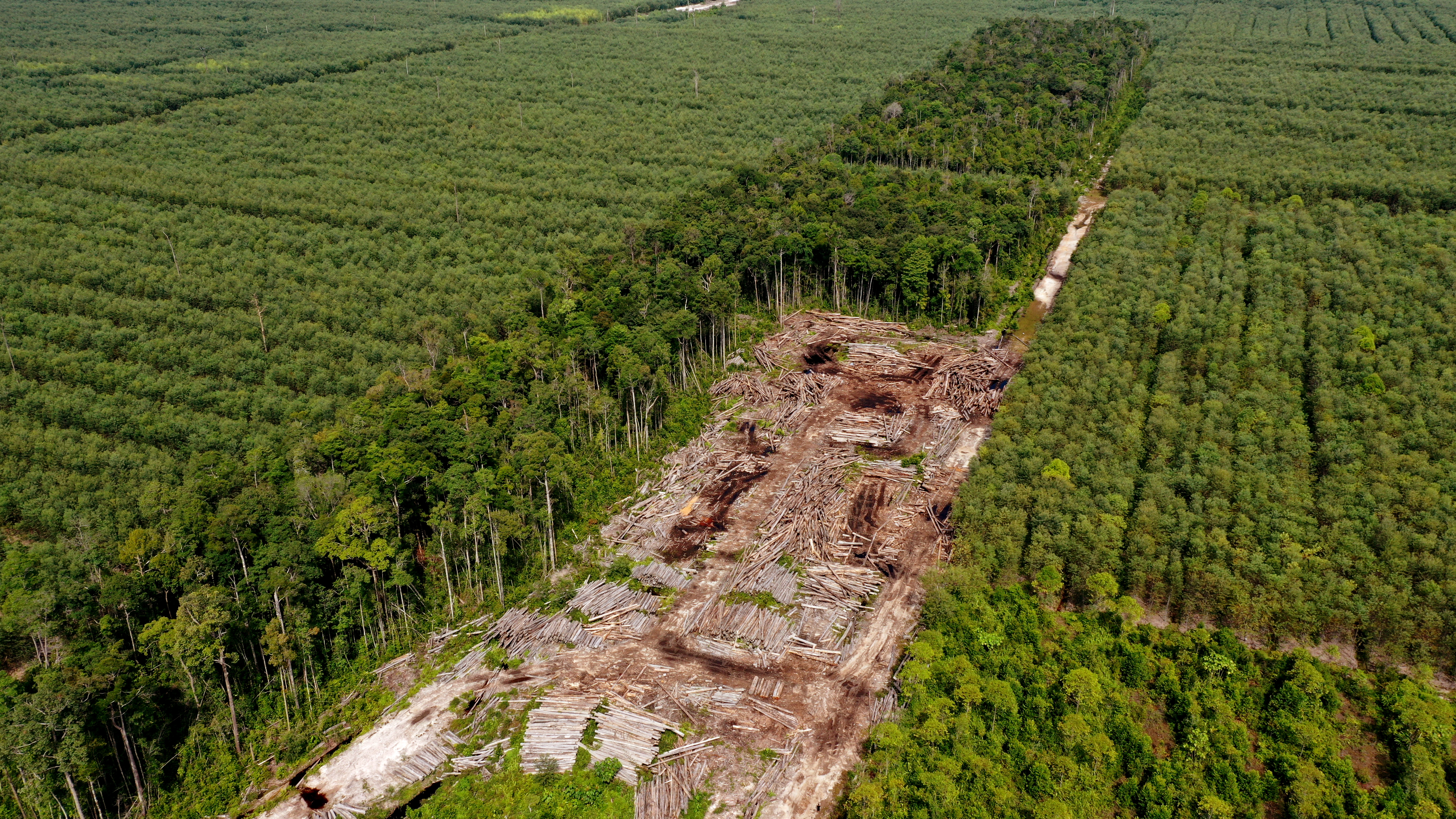
Young timber plantations surround remaining patches of natural forest in the concession of PT Industrial Forest Plantation, Central Kalimantan, November 2024
- One of Indonesia’s worst deforesters in recent years, PT Industrial Forest Plantation (PT IFP), has been certified as ‘sustainable’ under the Programme for the Endorsement of Forest Certification (PEFC)
- Between 2016 and 2022, the company cleared nearly 22,000 hectares of natural forest within a key orangutan stronghold in central Borneo
- Despite a public pledge to end deforestation in August 2023, PT IFP continued to clear natural forest for at least 10 months after this date. Auditors were aware of this, yet still approved certification in November 2024
- PEFC standards allow companies to greenwash their image by certifying only selected areas that meet sustainability criteria – even if other parts of the same concession have been recently deforested
- The scandal exposes deep flaws in voluntary certification and shows that only legislation can compel companies to deliver meaningful sustainability
- PEFC International should revoke PT IFP’s certification and revise its standards to exclude companies that have cleared natural forest anywhere on their land since 2010, along with other companies in the same corporate group
In an outrageous case of greenwashing, Indonesia’s second-worst deforester of recent years has been granted ‘sustainable’ status by one of the world's leading wood certification schemes. The scandal underlines how voluntary certification has time and again failed to protect the world’s forests, and how only legislation can force companies to truly prioritise sustainability.
In November 2024, the infamous Indonesian company PT Industrial Forest Plantation (PT IFP) was granted certification under the Programme for the Endorsement of Forest Certification (PEFC), allowing products made from timber grown in its concession to be sold as ‘sustainable’.
The PEFC logo, featuring two trees, is familiar to consumers around the world and found on wood products from furniture to tissue paper. It is meant to reassure buyers that the wood came from a sustainable source and a company that follows basic sustainability principles. Yet between 2016 and 2022, PT IFP destroyed almost 22,000 hectares (ha) of natural forest in central Borneo – an area roughly the size of Amsterdam.
The true cost
This area was until recently covered by lush, towering rainforest, alive with the echoing calls of gibbons, the heavy wingbeats of hornbills and the rustle of sun bears foraging on the forest floor.
Located between the Kahayan and Kapuas rivers, this region of central Borneo was recognised as a key stronghold for orangutans in a 2016 government-backed assessment. In 2022, roughly half of PT IFP’s concession was estimated to be orangutan habitat.
The forest is also critical for Indigenous (Dayak) communities in the area, who rely on it for their livelihoods, cultural practices and spiritual identity.
Today, much of this rich, ecological tapestry has been replaced by rigid grids of monoculture acacia and eucalyptus plantations. Residents of adjoining villages say they have lost access to wood and other materials, and protests have led to confrontations with the police.
In response to our findings, PT IFP stated that all clearing and planting activities are in line with work plans approved by Indonesia’s Ministry of Environment and Forestry, and claimed to have ceased logging of natural timber at the end of 2023. However, forest monitoring groups detected more than 1000ha of deforestation in the concession in 2024. Our analysis suggests that forest clearance in the concession continued until November 2024.
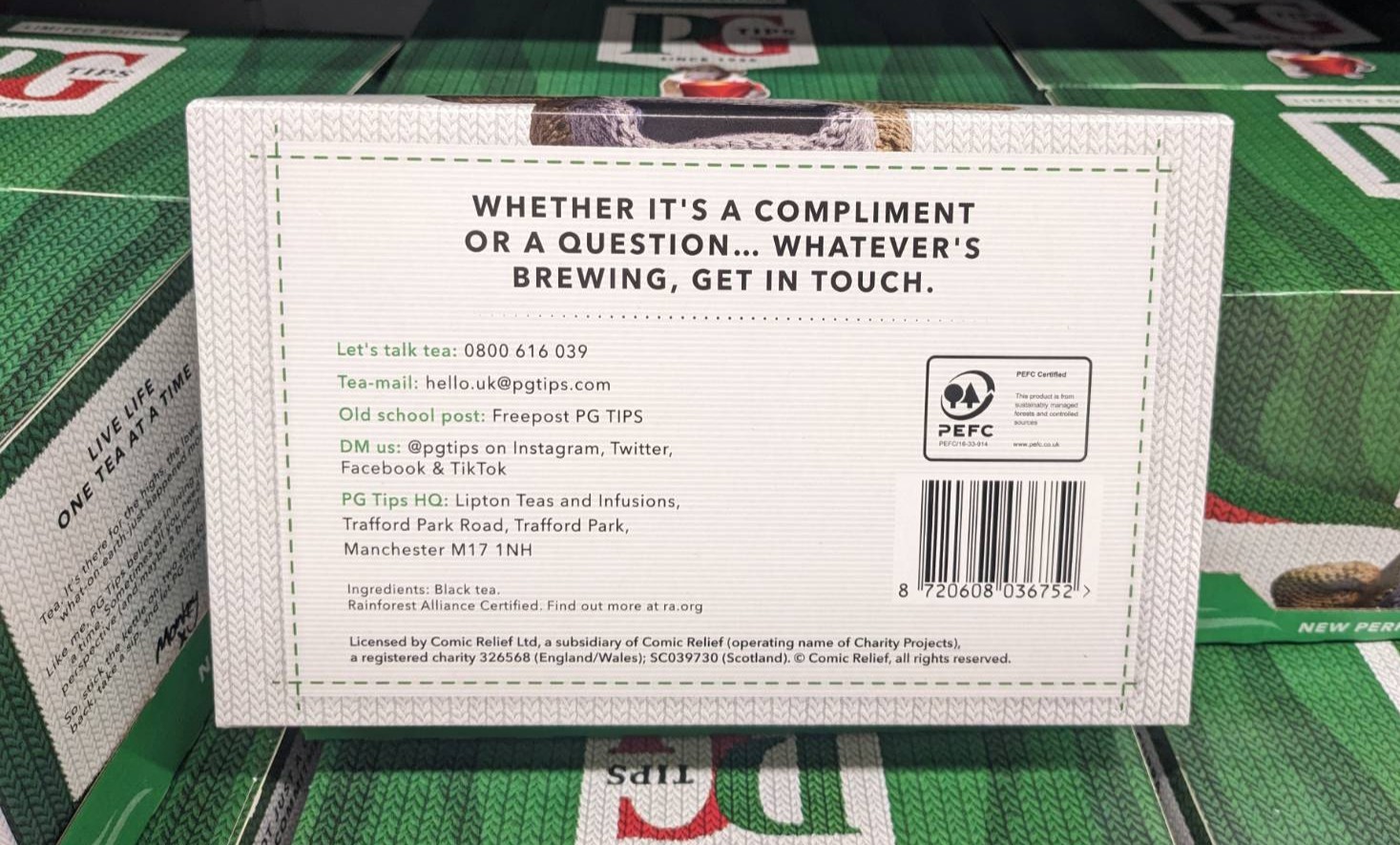
The PEFC logo can be seen on packaging in UK supermarkets
Greenwashing destruction
PEFC is a global umbrella body that endorses national-level certification schemes. When a national scheme’s rules for sustainable forest management are judged to meet PEFC’s standards, products certified under it may be sold internationally with the ‘sustainable’ PEFC logo.
In an email to Earthsight, PEFC International stated that it does not issue forest-management certificates itself, nor does it assess evidence relating to individual certification decisions, which are made by nationally accredited certification bodies.
In Indonesia, the PEFC-endorsed Indonesian Forestry Certification Cooperation (IFCC) Standard is supposed to exclude timber plantations established on land where primary or secondary forest was cleared after 31 December 2010. Narrow exceptions exist for small areas of deforestation which do not harm ecologically or culturally important sites and “make a contribution to long-term conservation, economic and social benefits.”
In July 2024, PT IFP was assessed against the IFCC Sustainable Forest Management Standard by auditing company Mutu International, and was deemed compliant despite having destroyed 29,075ha of secondary dryland forest between April 2010 and June 2024 – a fact recognised in Mutu International’s audit report. Of this area, 19,454ha were converted into plantation forest. PT IFP subsequently obtained PEFC certification in November 2024.
In response to our findings, PEFC International told us that only 81,534ha of PT IFP’s 100,989-ha concession were certified, with the remaining area excluded due to natural forest clearance since 2010, including 3176ha that were deforested in 2023.
Under this logic, the scheme offers virtually no incentive for plantation companies to protect natural forest in their concessions. By failing to apply the 2010 deforestation cut-off date across the entire concession, PEFC effectively lets major deforesters separate their land into ‘sustainably managed’ forest – typically mature acacia and eucalyptus plantations grown on land deforested before 2010 – and areas where they continued clearing land long after that date. Once all remaining natural forest has been cleared and the resulting deforestation timber sold, companies can then seek certification for their mature plantations, with no obligation to address the environmental or social harms caused by post-2010 deforestation, nor to restore a single hectare of destroyed forest.
Deforestation in the concession of PT Industrial Forest Plantation, 2021–25 © Auriga / Earthsight. Image source: Sentinel-2 via Google Earth Engine
PT IFP first publicly stated its objective to achieve sustainable forest management in line with the IFCC Standard in a February 2021 mission statement. By August 2023, it had formalised this commitment in a Sustainable Forest Management policy, pledging to comply with the standard and to not “significantly convert natural forests into plantation forests.”
Yet despite these promises, PT IFP cleared 334ha of natural forest between August 2023 and June 2024 – long after adopting its policy – a fact explicitly acknowledged by its auditor. In response to our findings, Mutu International told us that it flagged ongoing forest clearance during the audit period as a ‘Major Non-Conformance’. It noted that the issuance of PT IFP’s certification consequently required the implementation of corrective actions, including restrictions on further conversion, restoration of affected areas and ongoing verification through subsequent audits.
As such, PT IFP was granted certification as a ‘sustainable forestry’ company, despite breaking its promise to end deforestation, and being required to restore the logged forest.
A systemic issue
What’s more, this is not an isolated case. The six plantation companies owned by the secretive PT Borneo Hijau Lestari group, which has been linked to Indonesian conglomerate Royal Golden Eagle (though RGE has denied any association), are all PEFC-certified despite extensive deforestation after 2010.
Five of these companies became certified in January 2024, while the sixth was certified in October 2023. PT Santan Borneo Abadi, which operates a 37,825-ha industrial timber concession in eastern Borneo, deforested 12,252ha between 2016 and October 2020, while PT Mahakam Persada Sakti cleared 1837ha in the same time period. PT Borneo Hijau Lestari did not respond to our requests for comment.
Laws not labels
Along with other voluntary certification schemes, PEFC has positioned itself as a tool to facilitate compliance with the upcoming European Union Deforestation Regulation (EUDR), a new law that will prohibit the import into the EU of commodities derived from deforestation, including wood products.
In a recent public statement, PEFC Secretary General Michael Berger said: “PEFC certification aligns with the EUDR and goes further by covering vital social, economic, and environmental issues… Consumers can be assured that products carrying the PEFC label originate in a sustainably managed forest and that the company sources its forest-based materials responsibly.” Yet PEFC-certified products can still come from companies behind some of Indonesia’s worst deforestation: a striking contradiction between its claims and its practice.
While we have not found evidence that wood from areas deforested since 2020 – the EUDR’s cut-off date – has been sold as PEFC-certified, any wood coming from PT IFP could be at high risk of non-compliance with the regulation when it comes into effect. Our recently published report Risky Business reveals how PT IFP sold natural forest timber from deforestation in 2024 to companies exporting to Europe. It argues that European importers should only buy from companies with no recent deforestation in their supply chains.

The PEFC logo seen on paper packaging in the UK
According to Mutu International’s audit report, PT IFP’s 100,989-ha concession contains 27,982ha of plantation forest. If 19,454ha of this are non-compliant with PEFC standards due to forest clearance after 2010, that means only 30 per cent of PT IFP’s plantation wood can legitimately be sold as PEFC-certified.
Non-certified areas, where land clearance took place as recently as 2024 lie adjacent to certified ones with no clear physical demarcation, creating a high risk of mixing wood from both sources. PEFC International assured us that the certification body addresses this risk through field inspections, volume checks and verification of consistency between harvest records and the certified management plan. Mutu International noted that any discrepancies in segregation– whether in documentation or in the field – may result in sanctions.
Nevertheless, even if these safeguards ensure that all PEFC-certified wood originates from old plantations developed before 2010, does this not still undermine the purpose of certification if consumers seeking sustainable products are buying from a company responsible for extensive, recent deforestation?
Rewriting the rules
Fundamental weaknesses in voluntary certification systems have allowed large segments of the Indonesian timber industry to present a misleading image of sustainability. Despite PEFC’s claims that it can aid EUDR compliance, European companies must not rely on ‘green labels’, but instead conduct their own due diligence to ensure there is no risk of deforestation wood in their supply chains.
If it is to maintain any real significance for consumers, PEFC should revoke PT IFP’s certification and revise its standards so companies cannot simply divide their concessions into compliant and non-compliant areas. A company that has cleared natural forest anywhere in its concession since 2010 should be deemed entirely non-compliant – as should any company within the same corporate group (bringing it closer in line with Forest Stewardship Council (FSC) standards on forest conversion). PEFC should not endorse any national standards that do not meet these criteria.
Without these changes, PEFC risks becoming not just obsolete in the face of stronger supply chain legislation, but a greenwashing tool for some of the planet’s worst environmental offenders.