- Hoogendoorn Hout and Van den Berg Houtgroep are among Europe’s largest buyers of high-risk timber from Brazil. Both provide wood certified by green label FSC for the construction of decking and infrastructure, yet have obtained timber from a concession linked to illegal activities in the Brazilian Amazon
- The company operating the concession – Samise Indústria, Comércio e Exportação Ltda – is one of the biggest logging firms in Brazil. In 2025 it planned to harvest more logs than any federal concession has before
- By analysing satellite imagery, court cases and documents from Brazil’s environmental and forestry agencies, Earthsight, with the support of the Center for Climate Crime Analysis, uncovered a litany of infractions committed by Samise – resulting in fines worth over €1.2 million and a criminal conviction against the company
- Official data shows that in 2023 Samise’s timber made its way to the Dutch market in clear violation of a suspension ordered at the time by the authorities of all Samise’s operations. Its suspect wood continues to reach Europe
- Despite being accused by authorities of multiple serious offences, Samise’s FSC certificate remained valid for most of the last three years
- Our findings reveal continued flaws in enforcement of the EU Timber Regulation (EUTR), which is meant to prevent imports of illegal timber. They underline why importing companies’ due diligence under the EU Deforestation Regulation (EUDR), which will eventually replace the EUTR, must go beyond certification
- The case also has implications for Brazilian forest policy. The government plans to triple timber concessions inside federal forests, despite the latest scientific research showing that, even when carried out legally, such logging leads to permanent damage
Saracá-Taquera National Forest
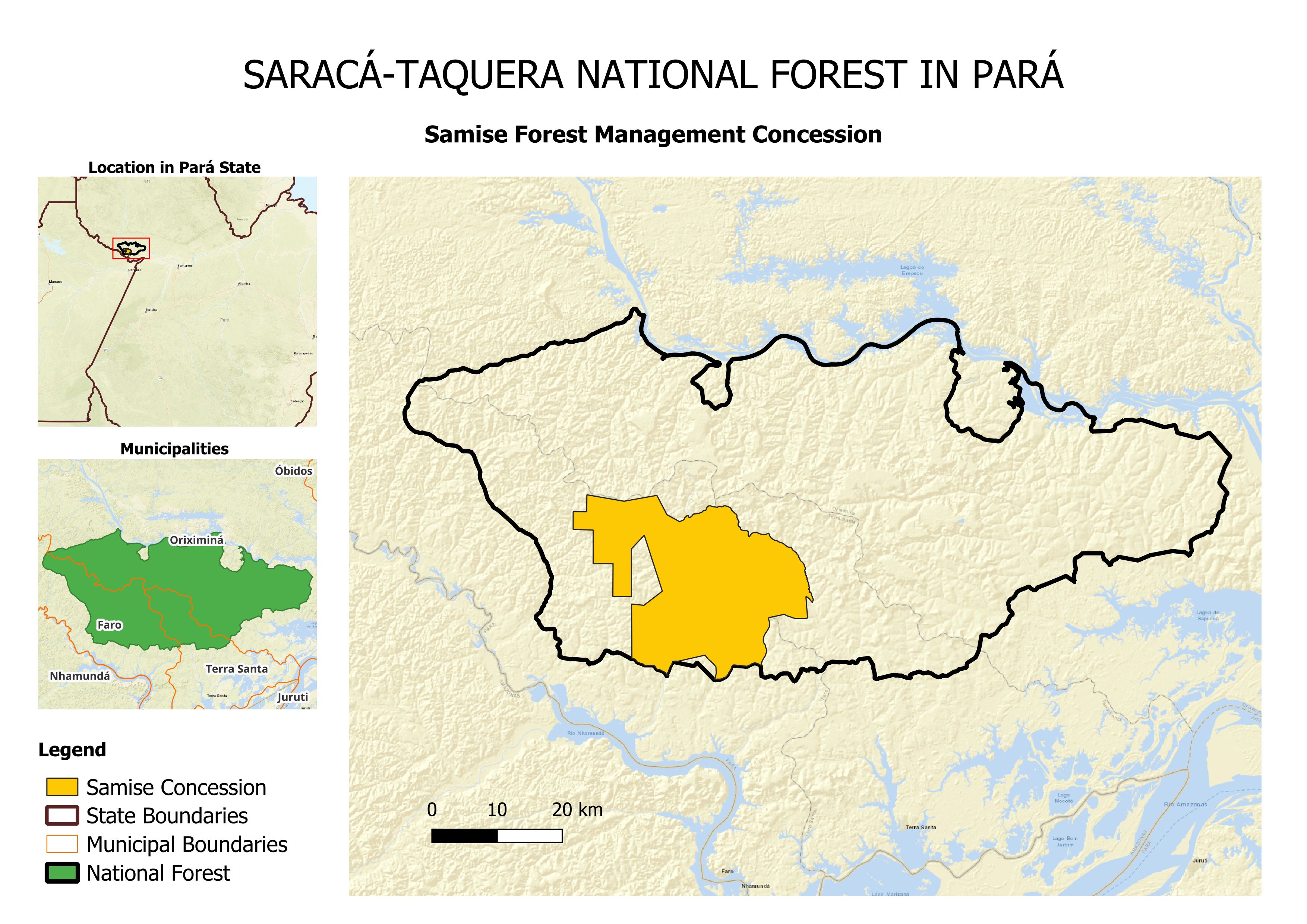
Recreation of a forest management unit map in the Saracá-Taquera National Forest
Just to the north of the mighty Amazon river, in the Brazilian state of Pará, the federally-protected Saracá-Taquera National Forest sprawls over an area of 429,000 hectares (ha) – almost twice the size of Luxembourg. The area is covered almost entirely by dense Amazon rainforest, occasionally broken up by dramatic plateaus.
Saracá-Taquera’s relatively well-preserved status, away from the state’s main deforestation frontiers in the south and east, adds to its ecological importance. The forest is home to 29 species of mammal found nowhere outside the Amazon.1 Around a fifth of the species identified in the forest are threatened with extinction, including the giant otter, giant anteater and northern tiger cat.





Collection of images of wildlife found in the Saracá-Taquera National Forest. Slide 1: Jaguar (Panthera onca) Slide 2: Lowland tapir (Tapirus terrestris) Slide 3: Giant river otter (Pteronura brasiliensis) Slide 4: Red brocket deer (Mazama americana) Slide 5: Giant anteater (Myrmecophaga tridactyla) Slide 6: Greater capybara (Hydrochoerus hydrochaeris) © Shutterstock
It was the second national forest to be subjected to timber concession tenders by the Brazilian government in 2010, which permit selective logging in certain areas within specified limits related to species, volumes and timeframes, among other criteria. In Saracá-Taquera, 154,000ha were earmarked for sustainable forest management.
In the 2010s, three companies were granted logging permissions in Saracá-Taquera. Samise Indústria, Comércio e Exportação Ltda was authorised to log an area of 59,408ha in the forest2 – an area almost the size of Barcelona. At the time the license was issued, the entire concession was classified as 'intact forest landscape' (IFL) – a dwindling but vital subset of forests untouched by industrial activity and large enough to host viable populations of key species.
Although Brazil accounts for approximately 20 per cent of the world’s total Intact Forest Landscape (IFL) area, the concept of IFL has largely been absent from the Brazilian government’s environmental licensing framework. Instead, current legislation primarily focuses on low-impact logging cycles, timber tracking systems and the protection of Permanent Preservation Areas (APPs).
Samise’s operations are some of the largest in Brazil. In 2021, it produced more logs than any other federal concession ever has.3 In 2025, it planned to break that record.4
The company also stands out in another way. The discovery of an apparently minor infraction linked to Samise’s concession in May 2023 led to further investigations by Brazil’s federal environment agencies. As the authorities dug deeper into the company’s operations, they uncovered a string of serious violations that resulted in several suspensions of Samise’s activities, and the issuance of a criminal conviction and large fines.
Earthsight, with the support of the Center for Climate Crime Analysis (CCCA), a non-profit organisation created to support and scale up climate action, has uncovered evidence showing that Samise stored and transported timber in breach of legal requirements, blatantly disregarding both Brazilian legislation and the authorities’ decisions. Wood from Samise’s concession was subsequently exported, exposing international markets to illegal timber.
What is illegal timber?
Brazilian law does not set out a single standalone definition of ‘illegal timber’. Timber may be considered illegal under a range of circumstances. In line with the definition adopted by the Food and Agriculture Organisation (FAO), in this report we use the term to refer to timber that is harvested, transported or sold in ways that breach environmental laws or the rules governing federal forest concessions. Such timber is also considered illegal under the EU Timber Regulation and the upcoming EU Deforestation Regulation.
This includes timber associated with environmental irregularities identified by Ibama (Brazil’s environment agency) or the Chico Mendes Institute for Biodiversity Conservation (ICMBio) that have resulted in sanctions, fines, embargoes or other enforcement measures, as well as timber linked to concession activities carried out during periods in which the concessionaire was not authorised to operate under the terms of its federal forest concession contract. This includes cases in which the Brazilian Forest Service (SFB) has suspended a contract due to environmental irregularities or non-compliance with contractual obligations, such as the non-payment of concession instalments.
This report refers to timber produced under the above circumstances as ‘illegal’ even where court or administrative proceedings may be ongoing.
Timeline of events
Regulatory actions, inspections and certification decisions relating to the concession.
ICMBio inspection
ICMBio suspends all activities and issues fine
Documents of Origin (DOFs) issued to Greenex
Judge lifts suspension
SFB inspection
ICMBio new inspection and fine
SFB suspends operations in the concession
First suspensionFSC certification suspended
First suspensionIbama suspends field operations and timber transportation and issues fine
SFB suspension lifted and new fine issued
First suspension liftedFSC certificate reinstated
First reinstatementCriminal case filed by Pará Federal Prosecutor's Office against Samise
FSC certificate suspended
Second suspensionSFB inspection
SFB suspends operations in the concession
Second suspensionFSC certification suspended
Third suspensionSFB suspension lifted
Second suspension liftedFSC certificate reinstated
Third reinstatementSamise found guilty and fined
FSC certification suspended
Fourth suspensionICMBio new inspection and fine
FSC cancelled Samise's certificate
A web of illegalities
On 5 June 2023, Samise moved a total of 3800m3 of angelim vermelho (Dinizia excelsa), from its log barging station5 in the municipality of Terra Santa to Greenex S/A Indústria Comércio e Exportação de Madeira in the municipality of Santa Barbara do Pará. Angelim vermelho is a reddish-brown hardwood known for its strength and durability and found only within dense Amazon rainforest. Greenex would saw the timber, which had been harvested in Samise’s Saracá-Taquera concession, and prepare it for sale to domestic and international buyers.
This would appear unremarkable, if not for one critical detail. Eleven days earlier, the Chico Mendes Institute for Biodiversity Conservation (ICMBio), the agency under Brazil’s Ministry of Environment responsible for managing federal areas, had banned all of Samise’s activities, including the transportation of logs, in response to evidence of fraud in the company’s operations.
Over a series of inspections preceding the ban, ICMBio agents discovered Samise had illegally transported logs to a farm neighbouring its concession without the necessary transport permits. Its employees attempted to convince ICMBio agents that members of a nearby riverine community had placed the company’s identification tags on logs at the property.
The Serra community
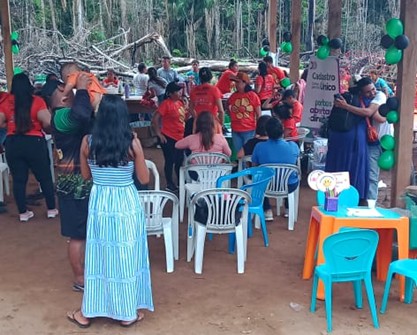
The Serra community, located in the municipality of Terra Santa, comprises around 32 families who identify as a traditional upland community (comunidade de planalto) settled in the area since the 1980s. Despite being the community closest to Samise's operations, residents report that neither the Brazilian government nor Samise has consulted them regarding its activities in the area. We were unable to confirm whether it was the Serra community which Samise tried to blame for the tampered identification tags found by ICMBio at the property neighbouring the concession.
When contacted by Earthsight, residents described significant sedimentation in local streams (igarapés), which they attribute to the construction of access roads. Clay and soil are washed into the streams, contaminating the water. Transport associated with Samise's operations has also reportedly created safety risks. Frequent movement of heavy vehicles generates large amounts of dust along the roads, reducing visibility and contributing to fatal traffic accidents. Timber trucks reportedly travel at high speeds along roads, raising concerns for the safety of children and residents.
The lack of recognition of traditional communities by state institutions and the failure to involve them in decisions related to Saracá-Taquera and the granting of concessions to timber companies has had serious consequences. Communities that had long lived in the area reportedly became subject to fines and restrictions for carrying out subsistence activities on their traditional lands, with some families forced to leave their original territories.6 This broader pattern of exclusion may help explain why concerns raised by the Serra community have remained unaddressed by both Samise and state authorities.
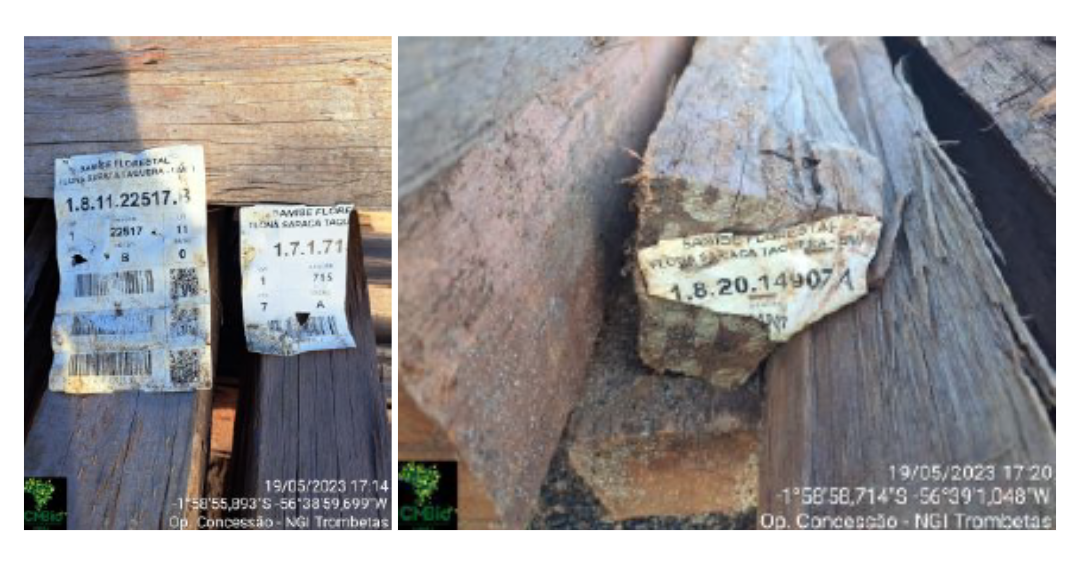
Images of logs and sawn timber found in a property outside the concession, showing Samise identification tags. Included in the Ordinary civil proceeding 1023402-56.2023.4.01.3902, 2023

Click to expand. Timber transport permits issued by Samise for timber moved on 5 June 2023. It is unclear how Samise was able to issue these permits during the suspension © SISDOF/Ibama
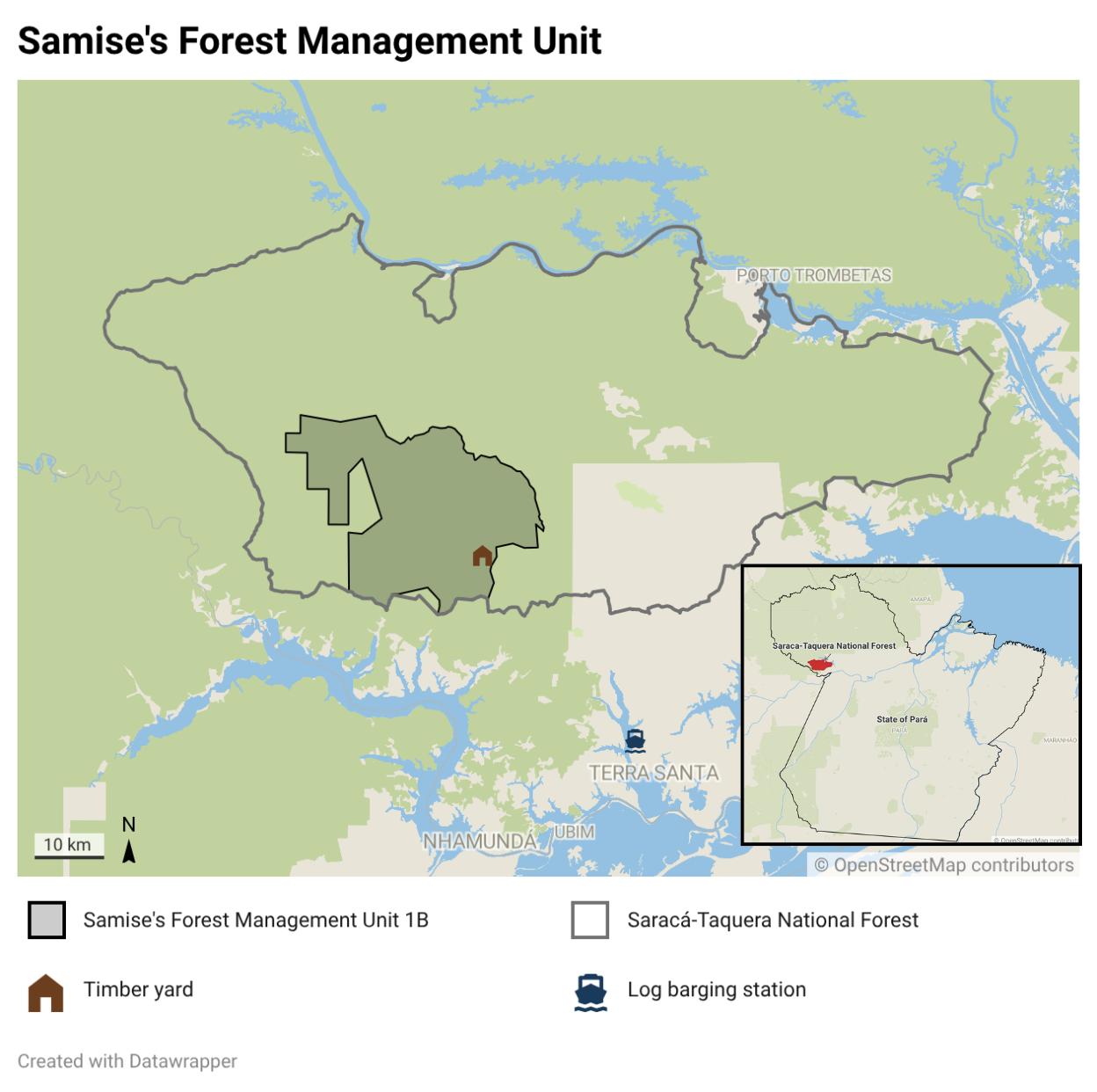
Map showing the location of Saracá-Taquera, where Samise operates. The map highlights Samise’s yard and log barging station, from where timber is transported to sawmills, including Greenex
Transport documents issued by Pará state authorities containing information on the origin of exported timber show that between July and December 2023, 3077m3 of angelim vermelho sourced from Samise's concession were processed and exported by Greenex to Europe. While it is not possible to confirm that this corresponds to the logs moved between Samise's port and Greenex on 5 June 2023, it is highly likely that importers received at least some timber that was illegally transported and sold during the suspension period (see ‘European Connections’).
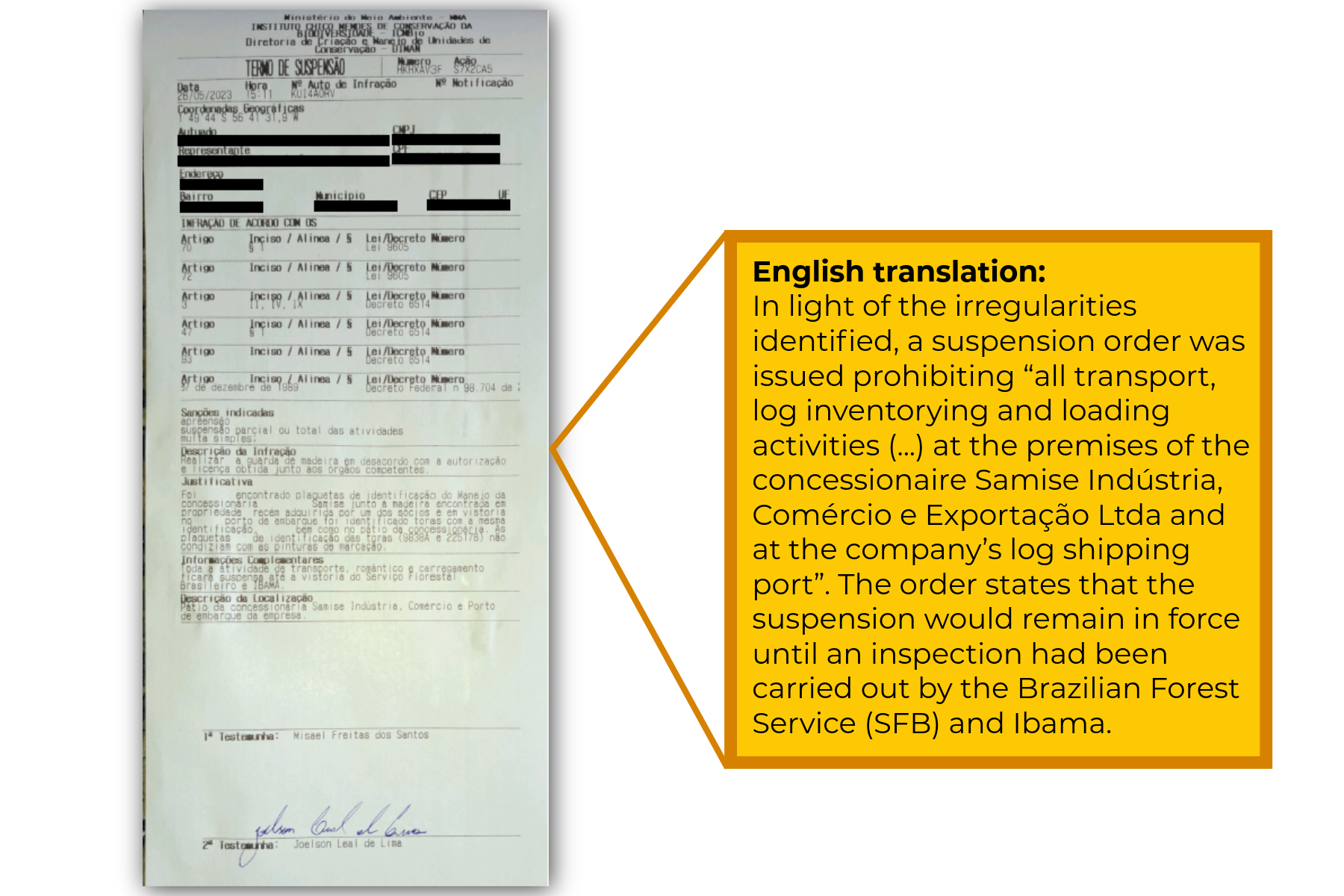
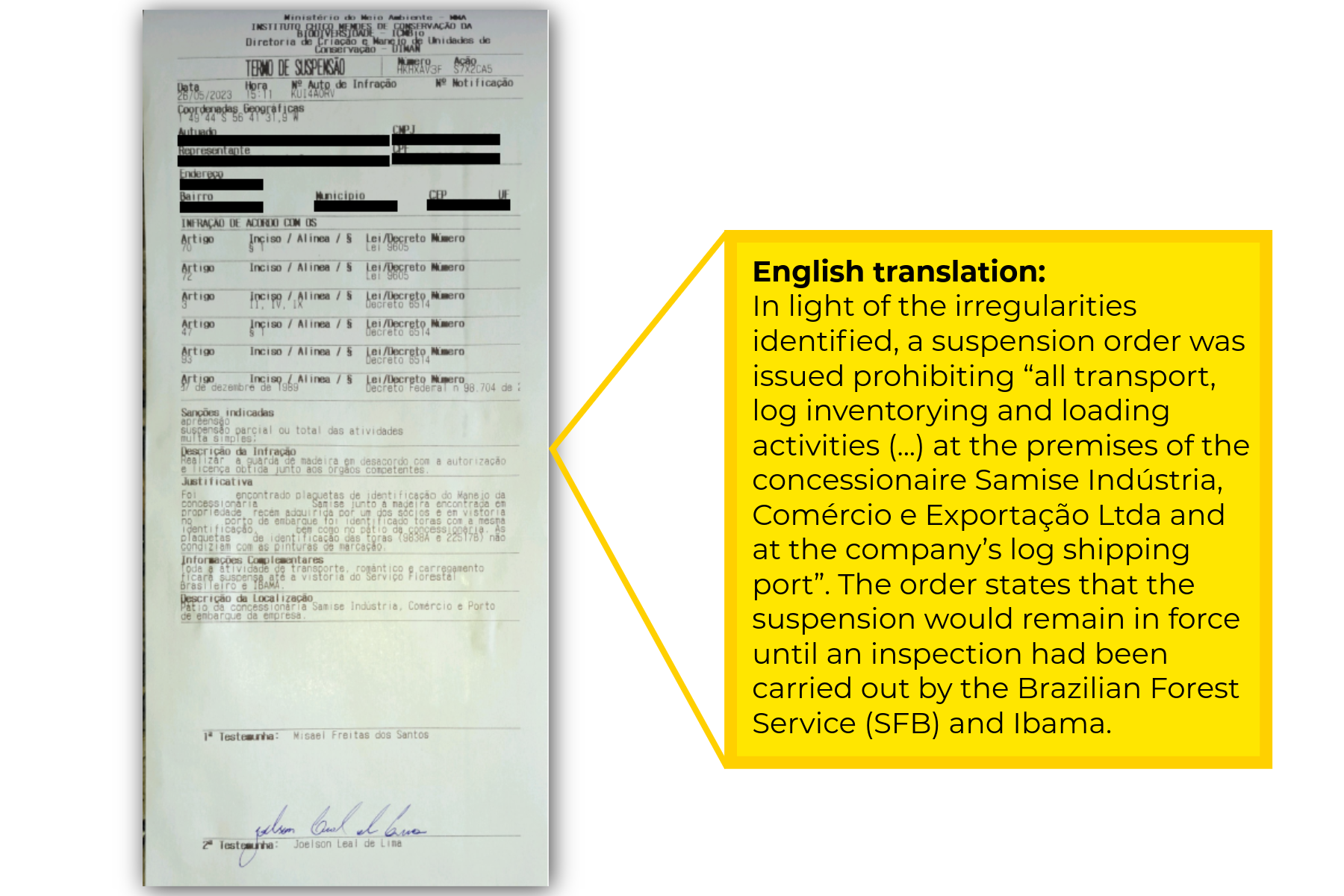
Click to expand. Image of a Suspension Order included in the Ordinary civil proceeding 1023402-56.2023.4.01.3902, 2023 © ICMBio (Copy held by Earthsight)
Conflict of interest
Weeks after illegally transporting timber to Greenex in contravention of the suspension order, Samise pressured the Brazilian Forest Service (SFB) and ICMBio to overturn it. In parallel, Samise filed a lawsuit against ICMBio citing delays in reassessing the case, which resulted in a ruling in the company’s favour in early July 2023 and the lifting of the suspension.7
A key argument presented by Samise, and accepted by the judge in their ruling, hinged on the alleged good faith of the company’s shareholders, who had contracted a company to conduct wood DNA testing. Genoma A laboratory would compare samples of the timber that ICMBio identified at the neighbouring farm with logs stored at the company’s port and tree stumps in its concession to verify whether it had originated from Samise’s operation.
The results of this test, obtained by Earthsight,8 concluded: "there is evidence that the samples collected do not originate from the same specimens as the samples from the logs/stumps." While the findings seemingly vindicate the company, they conceal a critical fact: Genoma A is owned by TMNH Participações, whose co-owner Ricardo Batista Tamanho also owns Samise.
This raises serious questions about the credibility of the evidence presented to the court.
In comments sent to Earthsight, Samise stood by the DNA testing carried out by Genoma A. The company also stated that the presence of identification plates outside its concession – those found at the neighbouring farm by ICMBio – could be explained by theft and vandalism in the area.
When questioned by Earthsight about the logs moved from its log barging station to Greenex during the suspension, Samise commented only on what was transported after it obtained the favourable court ruling in July, allowing the release and transport of this timber to customers.
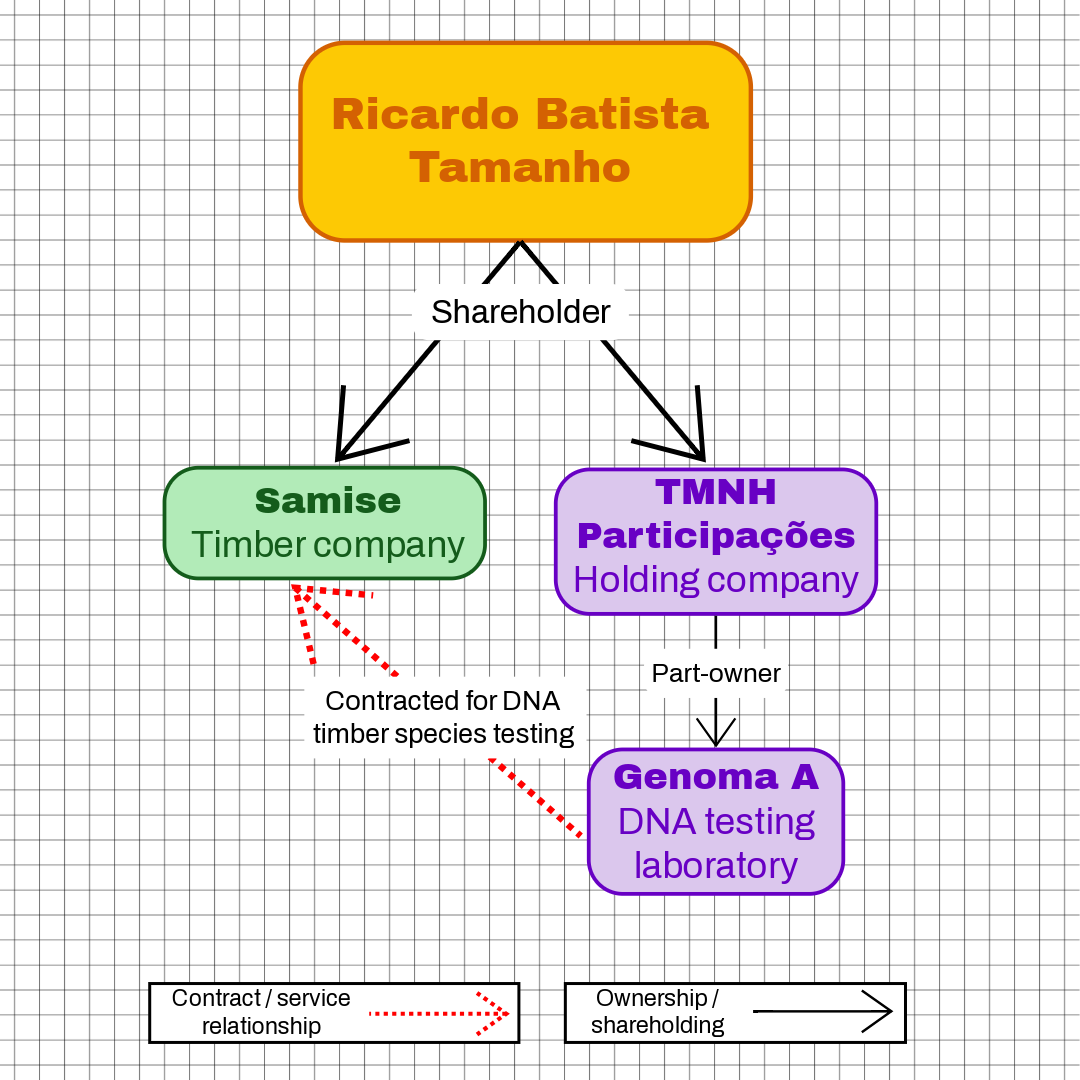
Diagram showing a relationship that raises questions about the independence of the testing
Over €100,000 worth of logs of unknown origin
Although the suspension of Samise’s activities had been overturned, Brazilian authorities remained suspicious. Just one week after the judge’s ruling, SFB and ICMBio agents carried out further inspections. On one occasion, ICMBio caught Samise employees in the act of sanding off the original identification numbers on logs and replacing them with new ones. Over 600 logs (1532m3) were suspected to have been tampered with. Forging or manipulating these numbers or documents intended to identify and trace wood are common practices used by companies to conceal timber’s origins, potentially indicating illegal extraction.9, 10 The logs, worth an estimated €100,000, were from 10 different species including several that are protected, such as Manilkara huberi, which is considered vulnerable by the International Union for Conservation of Nature (IUCN), an organisation seen as a global authority on assessments of the status of biodiversity.
In addition to this flagrant violation, ICMBio and SFB’s inspections uncovered further irregularities, including false or missing documentation required to identify, trace and transport timber, and inconsistences in recorded log measurements and volumes.11
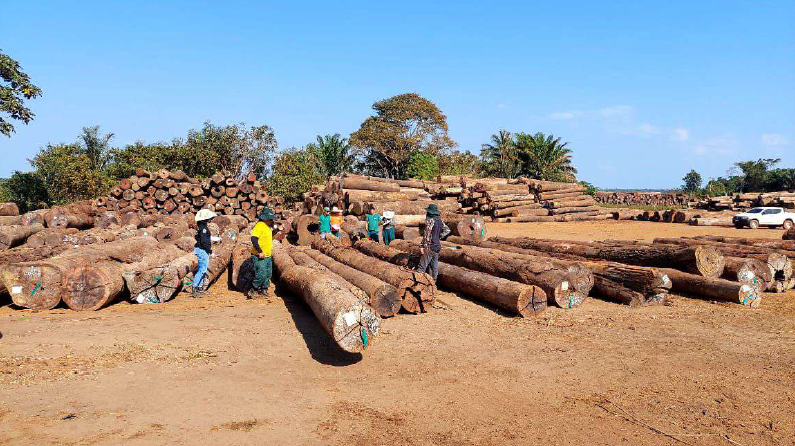
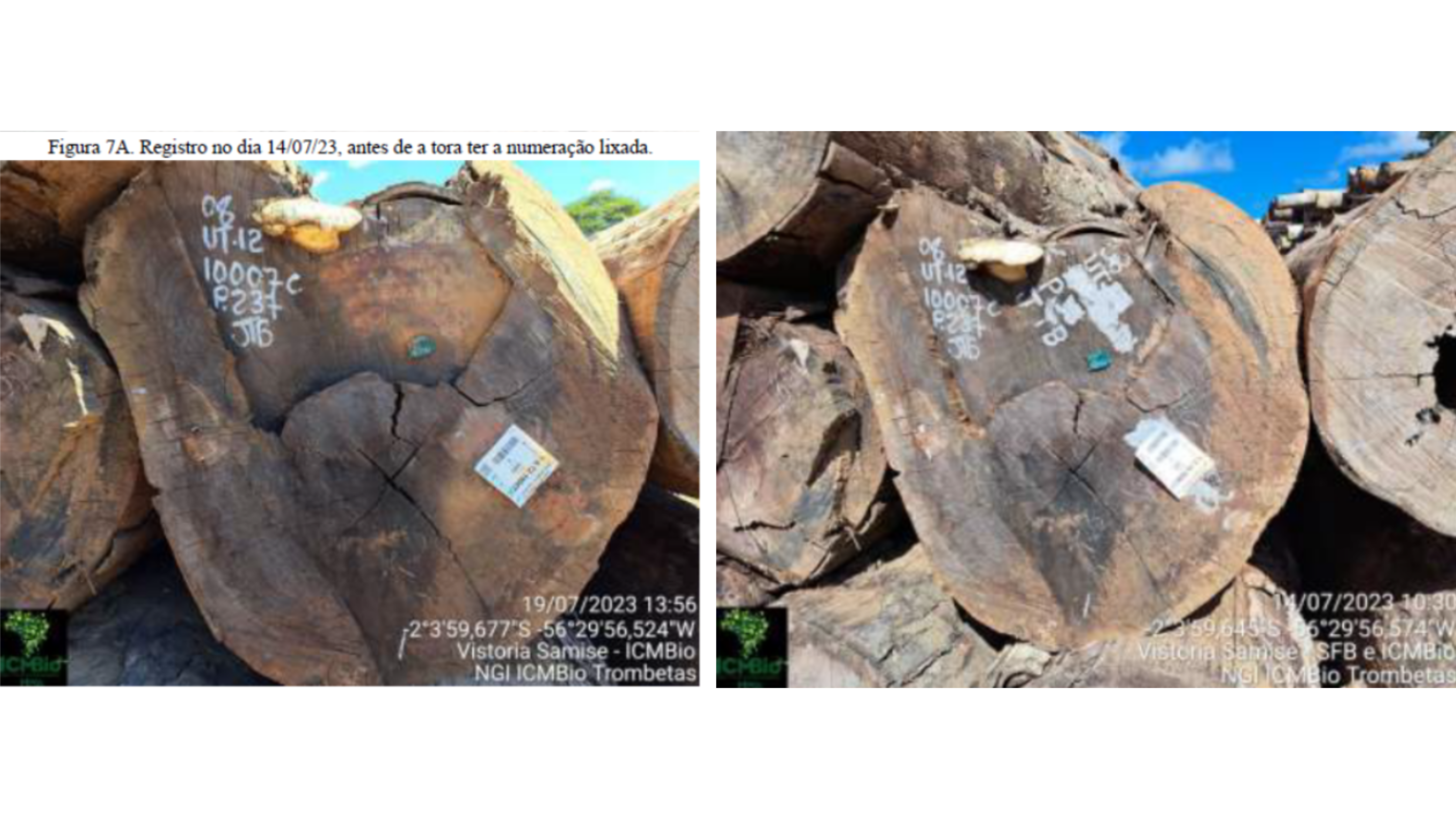
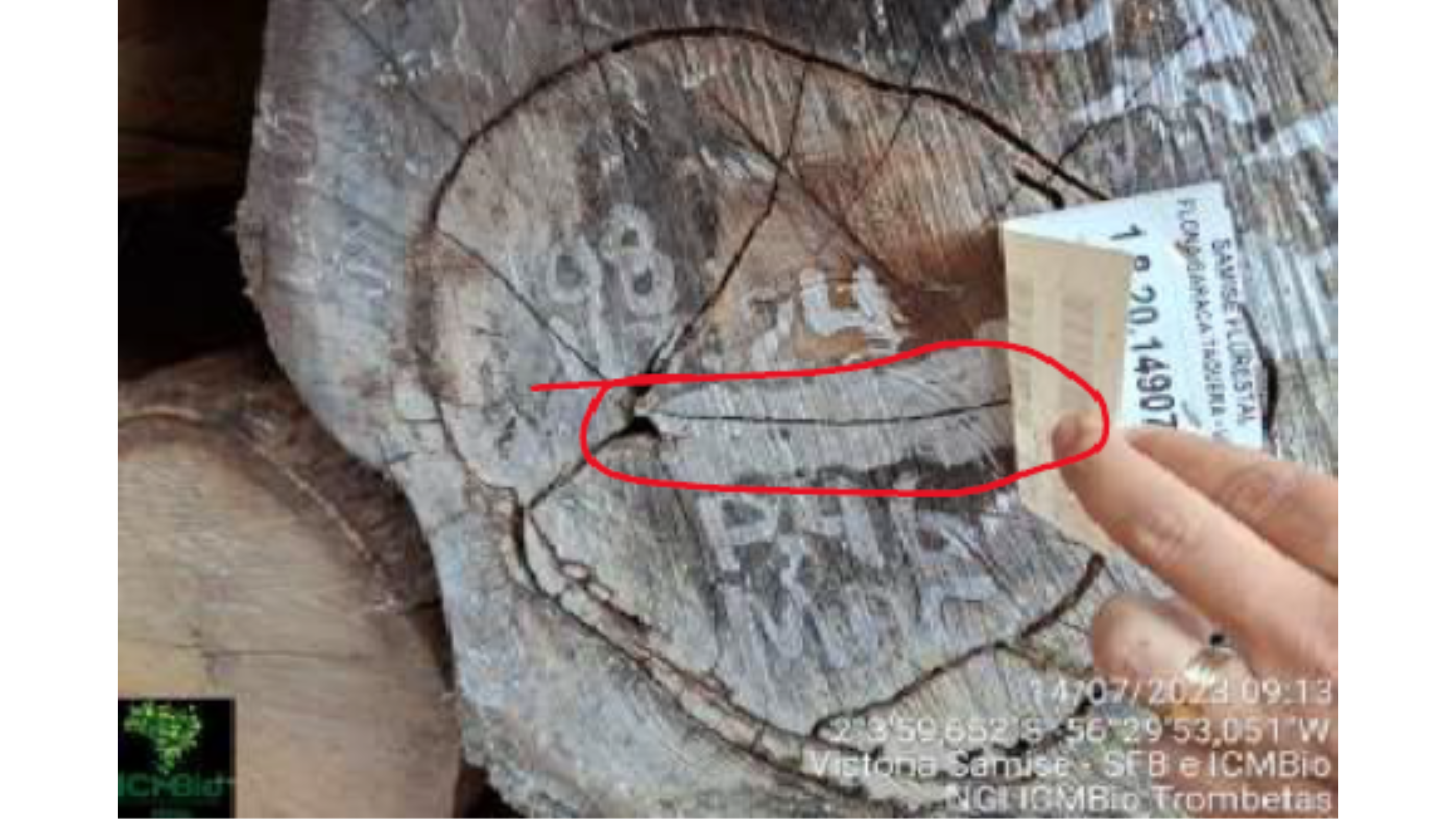
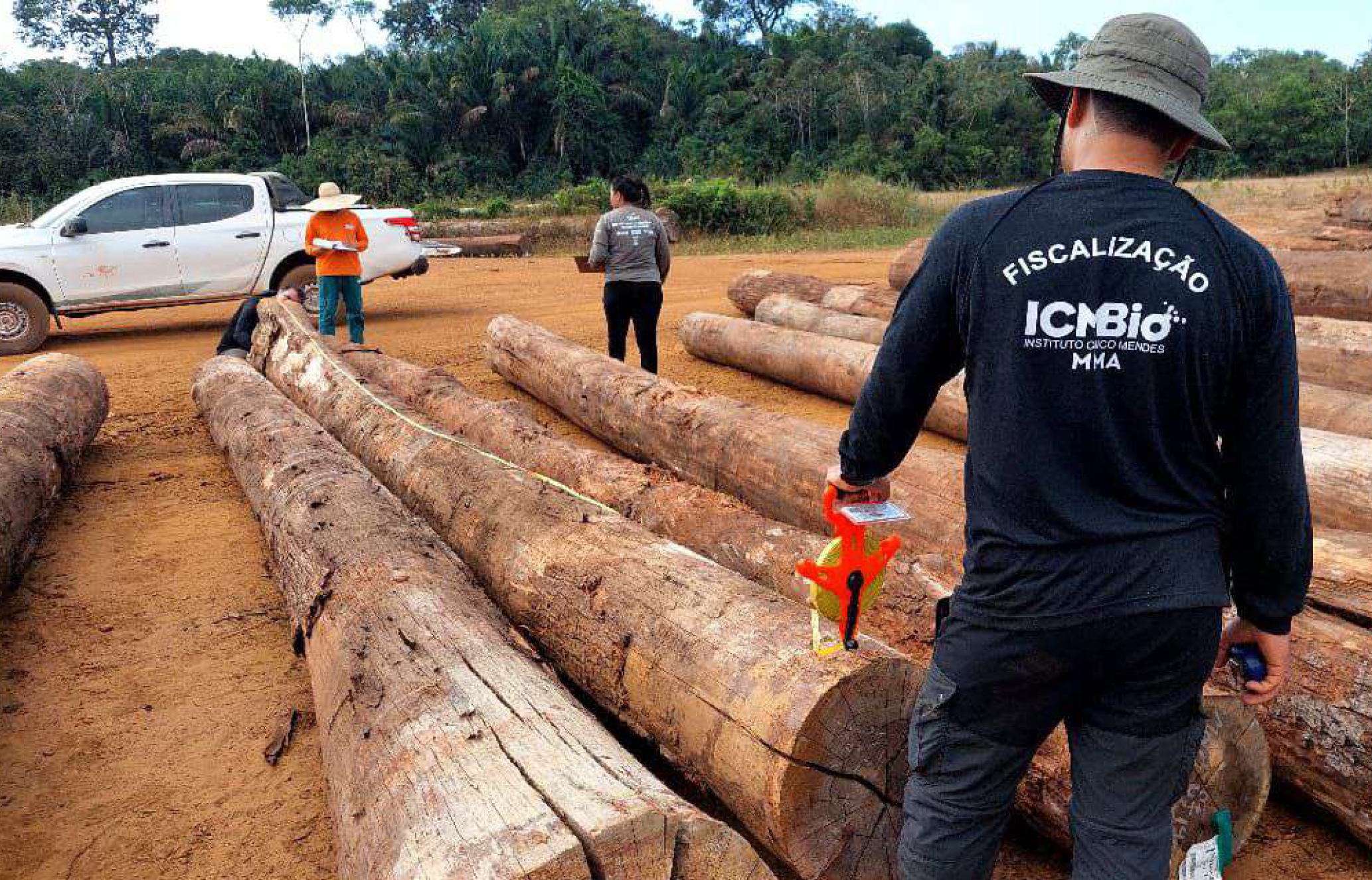
Slide 1: Image of ICMBio agents measuring the volumes of 602 logs as part of their investigation at Samise's log barging station, located in the municipality of Terra Santa, Pará. July 2023. Included in Ordinary civil proceeding 1023402-56.2023.4.01.3902, 2023. Slide 2: Images of logs found by ICMBio agents to have had original numbering sanded off between inspections. Included in Ordinary civil proceeding 1030381-34.2023.4.01.390, 2023. Slide 3: Image taken by ICMBio agents showing a log's original markings sanded off before being concealed with a label. Included in Ordinary civil proceeding 1030381-34.2023.4.01.390, 2023. © ICMBio (Copy held by Earthsight)
Samise’s contract was suspended again on 31 July 2023, this time by SFB, halting all activities inside the concession, including tree felling, transportation of logs and the opening of new roads and yards. The suspension was only lifted in early October 2023 to give Samise a chance to address the detected irregularities.
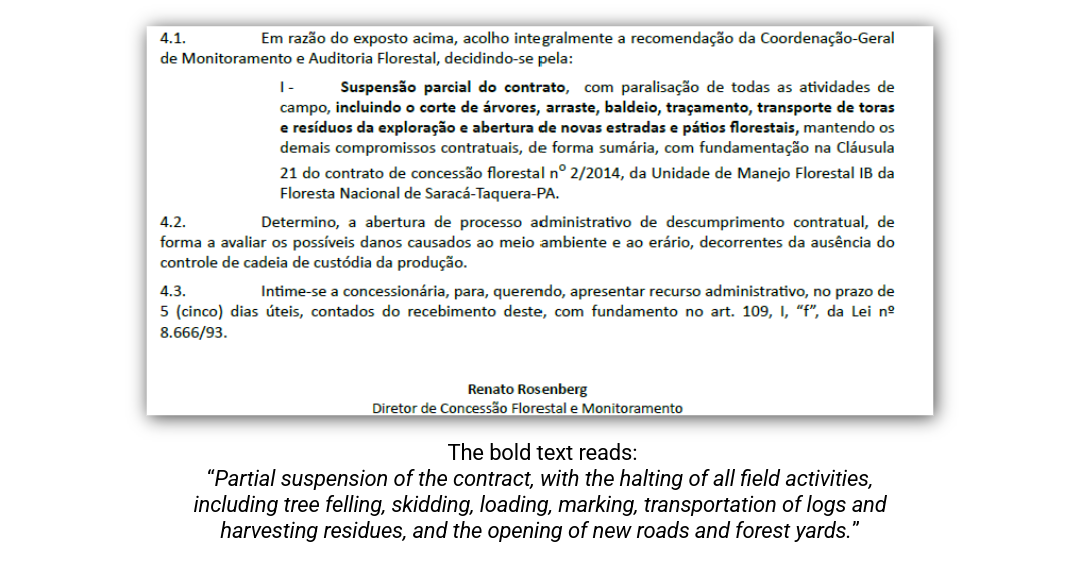
The SFB’s decision to partially suspend Samise’s activities
In response to the 2023 inspections, the Pará Federal Prosecutor’s Office filed two criminal cases against Samise. On 16 September 2025, the company was found guilty in one of these cases on the grounds that timber without proper identification of origin should be considered illegal, as its traceability cannot be guaranteed.12 As a result, Samise was fined and required to carry out community service equivalent to a nine-month custodial sentence by funding environmental projects. At the time of publication, the other case had not been concluded.13, 14
In comments sent to Earthsight, Samise denied tampering with identification tags. Citing weather conditions, it said that the markings on many of the logs stored outdoors had been erased over time and required replacement. The company acknowledged the existence of the criminal cases.
Unauthorised building of log roads and yards
Agents from Brazil’s environment agency (Ibama) also began investigating Samise’s production units (UPAs) – the areas inside Samise’s concession at Saracá-Taquera approved for extraction.
The investigation revealed that the company had been operating across an area of 4993.56ha without complying with the technical requirements set out in its management plan (SFMP). Specifically, information recorded in Samise’s Chain of Custody System (CCS), created to ensure full timber traceability, was inconsistent with what Ibama agents had observed in the field.
The agents reported duplicated log origin markings, discrepancies in recorded log dimensions and destinations, and the construction of yards and roads that deviated from those approved in the SFMP. These violations resulted in a new fine of €918,00015 which at the time of publication remained unpaid.
In addition to these infractions, documents analysed by Ibama revealed that harvested volumes of nearly 3000 angelim vermelho trees in 2022 were inconsistent with the inventory.16 This may indicate deficiencies in the forest inventory (such as under- or overestimation of volumes and/or methodological flaws), but also a risk that more timber was extracted than authorised. The same documents revealed inconsistency for 79 ipê trees – one of Brazil’s most valuable hardwood species and classified as endangered on the IUCN Red List.
Satellite imagery also shows Samise operating illegally outside the authorised time periods for its production units – in one area in 2022 and in two others in 2023. In one case, satellite imagery analysed by CCCA shows Samise constructing log roads and yards six months prior to when the company was permitted to do so, once again revealing Samise’s apparent disregard for the rules in place to ensure its concession is managed sustainably.17
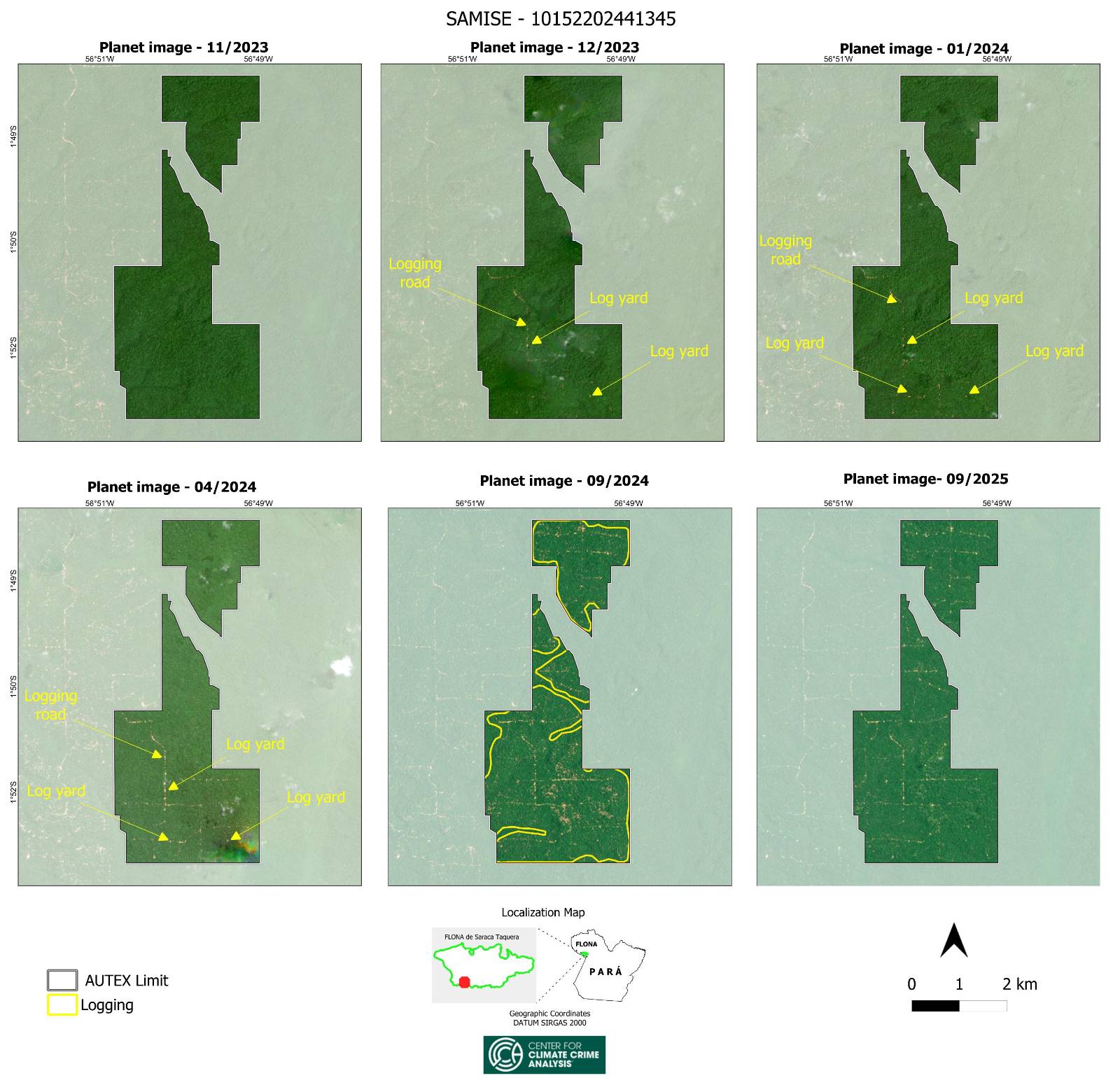
Satellite imagery shows that logging roads and yards were built in December 2023 six months prior to the June 2024 start date on Samise’s permit to operate in this area
In addition to fines totalling over €1.2 million for violations of Brazilian laws, at the time of publication Samise owed over €366,000 to the federal government in penalties for unpaid concession fees, earning it another suspension in March 2025.
When contacted by Earthsight, Samise stated that claims of illegality linked to its activities in Saracá-Taquera are false. The company also said that there is no history of irregular deforestation in its operations and noted that the administrative processes launched by the Brazilian authorities are ongoing.
European connections
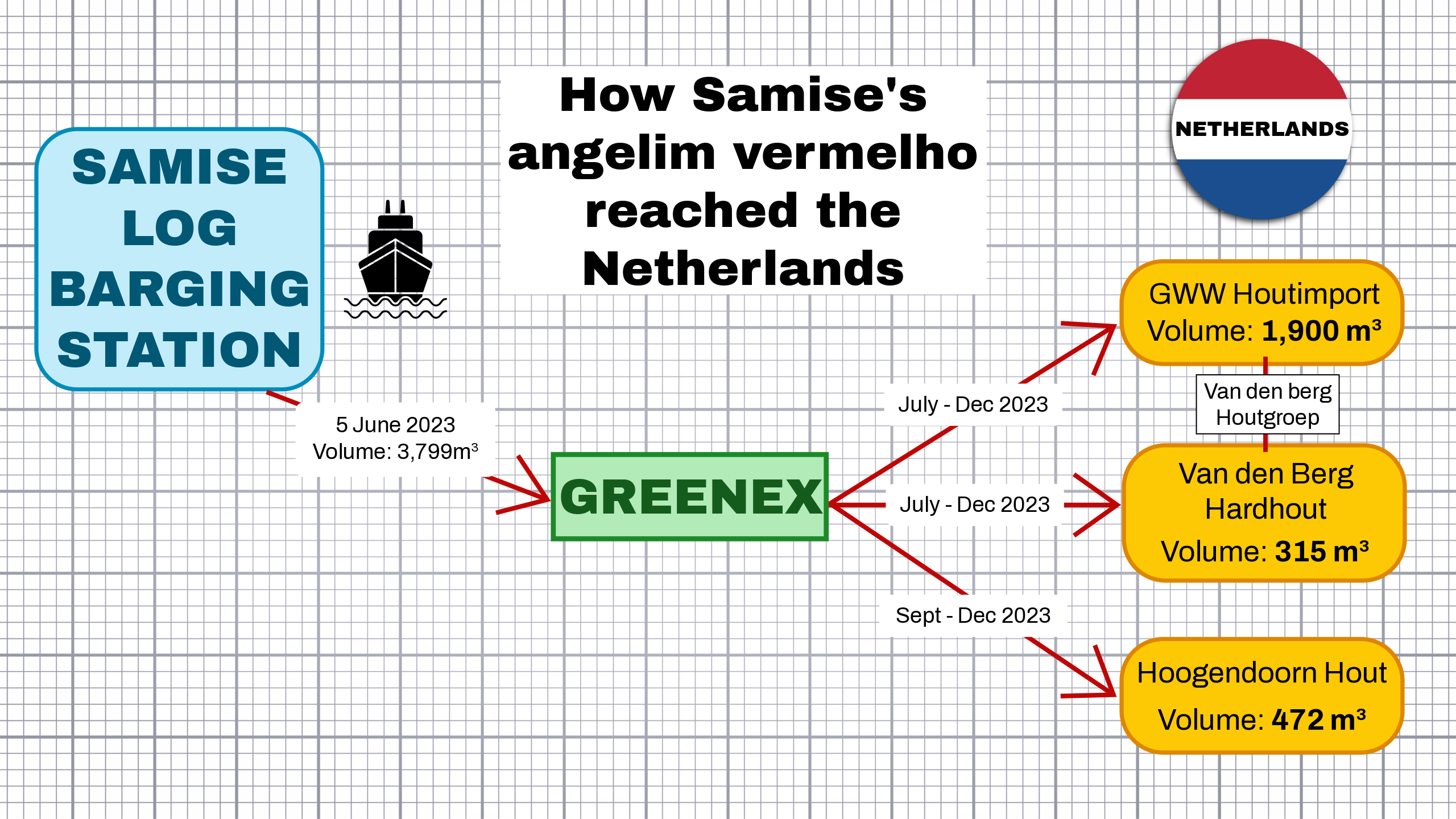
How Samise’s angelim vermelho reached some of the largest Dutch importers via Greenex: 2687m³ were exported between July and December 2023
Official documents analysed by our investigators reveal that Greenex exported around 3000m3 of timber originating from Samise’s concession to the Netherlands between July and December 2023. This figure is close to the 3800m3 moved illegally on 5 June 2023.
The Dutch market accounted for over 95 per cent of Greenex’s exports of angelim vermelho during this period, with smaller volumes shipped to the US and France. It is not possible to determine with certainty that angelim vermelho logs moved illegally in June 2023 during ICMBio’s suspension were the same timber exported by Greenex to Dutch importers in the second half of the year. However, Samise has been a longstanding supplier to Greenex. All angelim vermelho exported by Greenex to the Netherlands from July to October 2023 originated from Samise.
Greenex is a sawmill that has operated in the Brazilian state of Pará since 1986 and currently exports timber to 13 countries, including the Netherlands, France and the UK. Despite holding certification from the Forest Stewardship Council (FSC) since 2016, the company has accumulated 81 fines since 2010 for exporting timber without the required authorisation from Ibama – illegal under Brazilian law. Taken together, they amount to almost €740,000. In the year preceding Samise’s 2023 suspensions, Greenex was issued 36 fines. Ten were specifically for exporting angelim without authorisation.
When contacted about Greenex’s history of infractions and fines, FSC acknowledged these concerns and said decisions regarding Greenex’s certification are the responsibility of the certification body. At the time of publication, Greenex had not responded to Earthsight’s requests for comment.
Despite a history of infractions and fines, Greenex continues to dominate Brazilian exports of angelim vermelho to Europe. Between 2023 and 2025, it was the leading exporter, responsible for 25 per cent of all exports. The Netherlands, Greenex’s largest export destination, accounted for almost 30 per cent of its international sales.
Over 90 per cent of the 2940m3 exported to the Netherlands from July to December 2023 were purchased by the country’s largest importers: GWW Houtimport,18 Van den Berg Hardhout and Hoogendoorn Hout. In this period, Greenex accounted for nearly 70 per cent of these companies’ imports of Brazilian angelim vermelho. At the time of publication, none of these importers had responded to Earthsight’s requests for comment.
GWW Houtimport advertises itself as a supplier of sustainably produced wood, including FSC-certified angelim vermelho, for civil engineering, road construction, and waterworks projects. GWW Houtimport was Greenex’s largest buyer of angelim vermelho between July and December 2023, importing 1900m3.
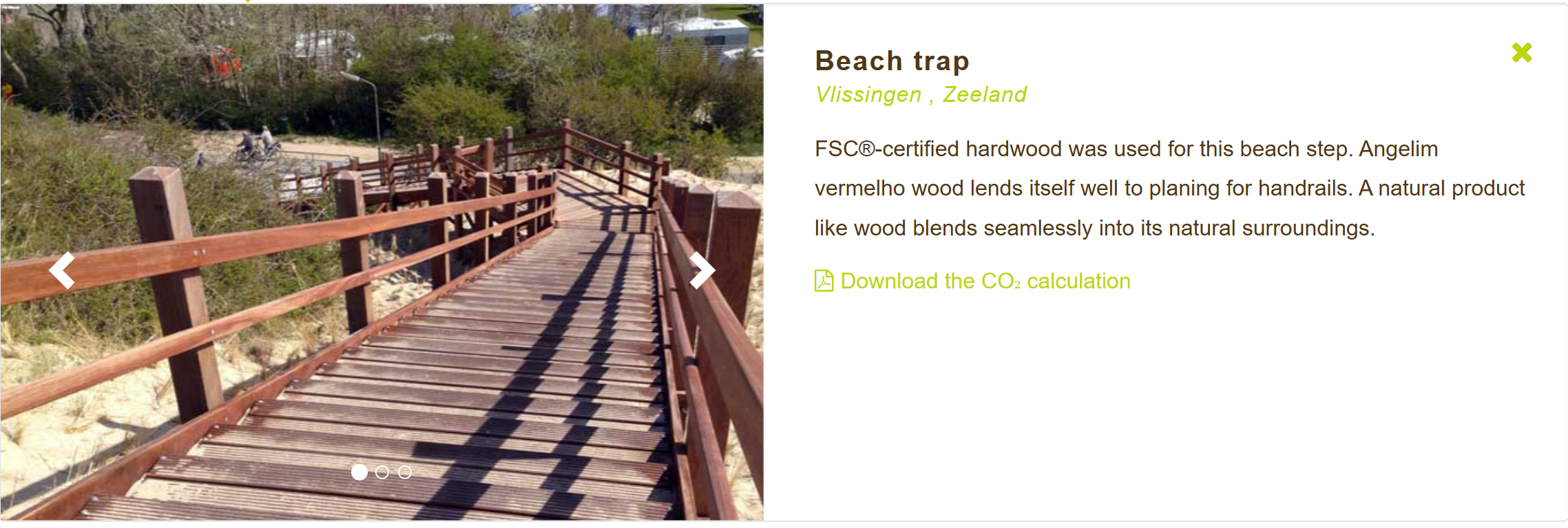
Screenshot of GWW Houtimport website showing outdoor wooden stairs in Zeeland, Netherlands, made using angelim vermelho. 2025 (https://www.gwwhoutimport.nl/projecten/index.html)
Hoogendoorn Hout supplies businesses in civil engineering, landscaping and construction. According to its website, the company sources certified timber “from regions where sustainable forest management is actively promoted.” It is unclear what assurances this vague claim is meant to provide Hoogendoorn Hout’s clients.
Between July and December 2023, Hoogendoorn Hout imported 472m3 of Samise’s angelim vermelho processed by Greenex. During conversations with undercover Earthsight investigators, the Dutch company confirmed that they only source FSC-certified angelim vermelho from Brazil and shared that 90 per cent of its customers are based in the Netherlands.
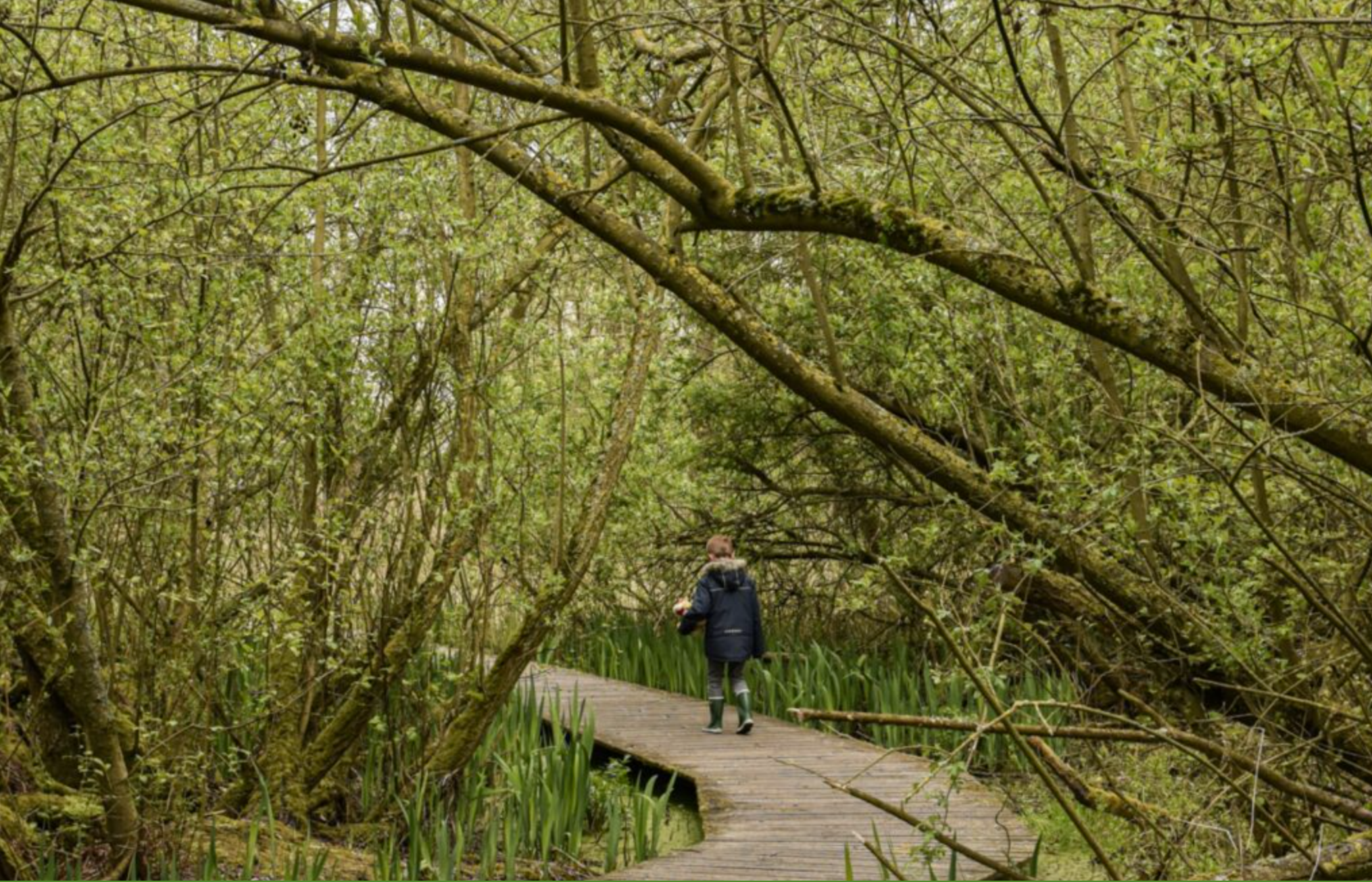
Screenshot of a boy walking on the Prielenbos Boardwalk in Zoetermeer constructed with angelim vermelho imported by Hoogendoorn Hout from the company’s website (https://www.houtindegww.nl/project/vlonderpad-prielenbos/)
Another major importer in the Netherlands was Van den Berg Hardhout. Between July and December 2023, the company imported 315m3 of angelim vermelho from Greenex originating from Samise. The company imports, processes and sells only FSC-certified hardwood, according to its website. Van den Berg Hardhout lists a range of projects using angelim vermelho, including boardwalks, terrace decking, and the veranda of a boutique hotel in the Veluwe National Park.
According to the most recent available data, these supply chain links are still going strong. Between January 2024 and December 2025, GWW Houtimport, Hoodendoorn Hout and Van den Berg Hardhout together purchased just over three-quarters of all angelim vermelho exported by Greenex to the Netherlands. Available data from Pará for the period between April and October 2025 reveal that almost 40 per cent of all angelim vermelho exported to these Dutch companies by Greenex originated from Samise.
In January 2026, Van den Berg Hardhout merged with GWW Houtimport to form one company, Van den Berg Houtgroep. Van den Berg Houtgroep states that it only sells wood carrying the FSC label, or from sawmills in the process of becoming certified.
The EU Timber Regulation (EUTR), in force since 2013, bans the import of illegally produced timber products into the EU and requires companies to conduct due diligence to ensure compliance. Companies are required to assess the risk that illegal timber is present in their supply chains, and refrain from placing such timber on the EU market if that risk is deemed ‘non-negligible’. Yet the continued flow of wood linked to Samise points to weaknesses in industry’s compliance with the law – despite clear risk exposure, imports of Samise timber appear to have not been subject to effective due diligence.
EU-wide reviews of EUTR enforcement suggest non-compliance rates are high and enforcement patchy. In 2023, ten years after the EUTR entered into force, 38 per cent of wood importers inspected by enforcement authorities were still non-compliant. Serious penalties for breaches remain rare: in 2023, authorities issued over 600 minor administrative penalties and notices of remedial action, but only six serious penalties.
This investigation is not an isolated case. Numerous EU companies have faced allegations of EUTR non-compliance. In April 2025, for instance, the Environmental Investigation Agency (EIA), an NGO, exposed Dutch companies for importing wood from embargoed harvest sites and from Brazilian companies fined by Ibama for trading illegal timber.
FSC missing in action
Both Hoogendoorn Hout and Van den Berg Houtgroep rely on the FSC label as proof that their timber is sustainably sourced, saying that most if not all of the tropical hardwood they import is certified. FSC is widely regarded as the international gold standard for responsible forest management. Yet due to slow action from Imaflora – the certification body in Brazil responsible for assessing Samise’s compliance with the scheme’s standard – and apparent loopholes in FSC’s guidance, timber from Samise entered the EU as certified despite the company’s infractions.
Imaflora suspended Samise’s FSC certificate on four occasions. First in August 2023, one week after SFB suspended the concession, before reinstating the certificate when the suspension was lifted in October 2023. The certification body suspended Samise’s certificate for an unknown period of time in February 2024 after the company failed to resolve previously identified labour related issues, and again from April to October 2025 in response to a suspension imposed by SFB. Finally, in December 2025, Imaflora suspended the certificate over irregularities in the mapping of conservation areas in parts of Samise’s concession.
Imaflora arguably would have been expected to terminate Samise’s certificate in response to repeated indications of irregularities in the company’s operations. However, Imaflora only terminated Samise’s FSC certificate on the day that Earthsight shared its findings with the certification body in March 2026. Until then, Samise had been certified for a decade. Imaflora told Earthsight this was a coincidence.
Any suspension of a certified concession imposed by government authorities should constitute a major breach of FSC’s Principles and Criteria because it removes the company’s legal rights to exploit the certified forest in question. Crucially, however, Imaflora took no action to suspend Samise’s FSC certificate following the 39-day suspension imposed by ICMBio from May to July 2023, during which Samise also illegally transported timber to Greenex for processing.
In comments sent to Earthsight, FSC said that there is no specific requirement for certificate holders to proactively report sanctions or suspensions to the certificate body or to FSC, despite the fact that such suspensions affect a company’s compliance with certification requirements. Instead, FSC told Earthsight that such non-conformities should be detected during auditing.
This is emblematic of a key flaw in FSC’s current process. Outside of scheduled audits, action taken in response to a suspension of a certified company’s operations depends largely on that company’s willingness to report itself. This not only reduces the likelihood that suspensions will be reported, but also leaves large periods of time between audits when a suspended concession can remain certified. To mitigate this, FSC should require certification bodies to actively seek out information on sanctions or suspensions against certificate holders.
FSC deferred all questions on decisions regarding Samise’s certificate to Imaflora, which told Earthsight that it only became aware of issues with the company’s concession after SFB imposed its own suspension in July 2023.
Samise’s continued certification reveals a wider reason why FSC certificates cannot provide a guarantee of EUTR compliance. As opposed to the EUTR, where the burden of proof is on companies to demonstrate their timber is legal, the cancellation of an FSC certificate often only occurs once a conviction is obtained and all appeals exhausted, which can take years. This can be seen in Samise’s case, where Imaflora ended the company’s certificate only once it had been handed down a criminal conviction, despite the relevant allegations against Samise having been made two years earlier. Earthsight has observed similar patterns in other countries where FSC has operated, including Ukraine and Russia.
100 per cent certified angelim vermelho?
FSC told Earthsight that companies are expected to check supplier certification validity through FSC’s public database. In cases where there is a risk of non-certified wood entering FSC supply chains, timber processors and retailers handling certified material are obligated to identify these products and implement measures to ensure they are not sold with the FSC label.
In the context of the EUTR, the suspension of a timber supplier’s FSC certificate would arguably constitute a non-negligible risk of illegality, and require importers to refrain from placing wood from that supplier on the EU market to ensure compliance with the regulation.
Official data from the government of Pará, however, reveals that Greenex exported Samise timber in 2023 and 2025 to Hoogendoorn Hout and the companies making up Van den Berg Houtgroep. During the first suspension of Samise’s FSC certificate from 7 August to 6 October 2023, over 1000m3 of angelim vermelho from Samise’s concession were exported to GWW Houtimport and Van den Berg Hardhout (now Van den Berg Houtgroep), and Hoogendoorn Hout. During the second suspension of Samise’s certificate from April to October 2025, the same companies received 831m3 of Samise’s timber from Greenex.
Analysis of shipment records shows that some of this exported wood was marked as FSC, suggesting that Samise timber may have been traded as certified during a period when the company was prohibited from using the FSC label. In early 2026, both Hoogendoorn Hout and Van den Berg Houtgroep told undercover Earthsight investigators that all angelim vermelho products they stock are FSC certified.
In comments sent to Earthsight, Samise stated that in each instance of its FSC certificate being suspended, it had informed its customers. Earthsight asked Greenex, Hoogendoorn Hout and Van den Berg Houtgroep whether they had taken any action in response to the suspensions of Samise’s FSC certificate, but at the time of publication, none had responded.
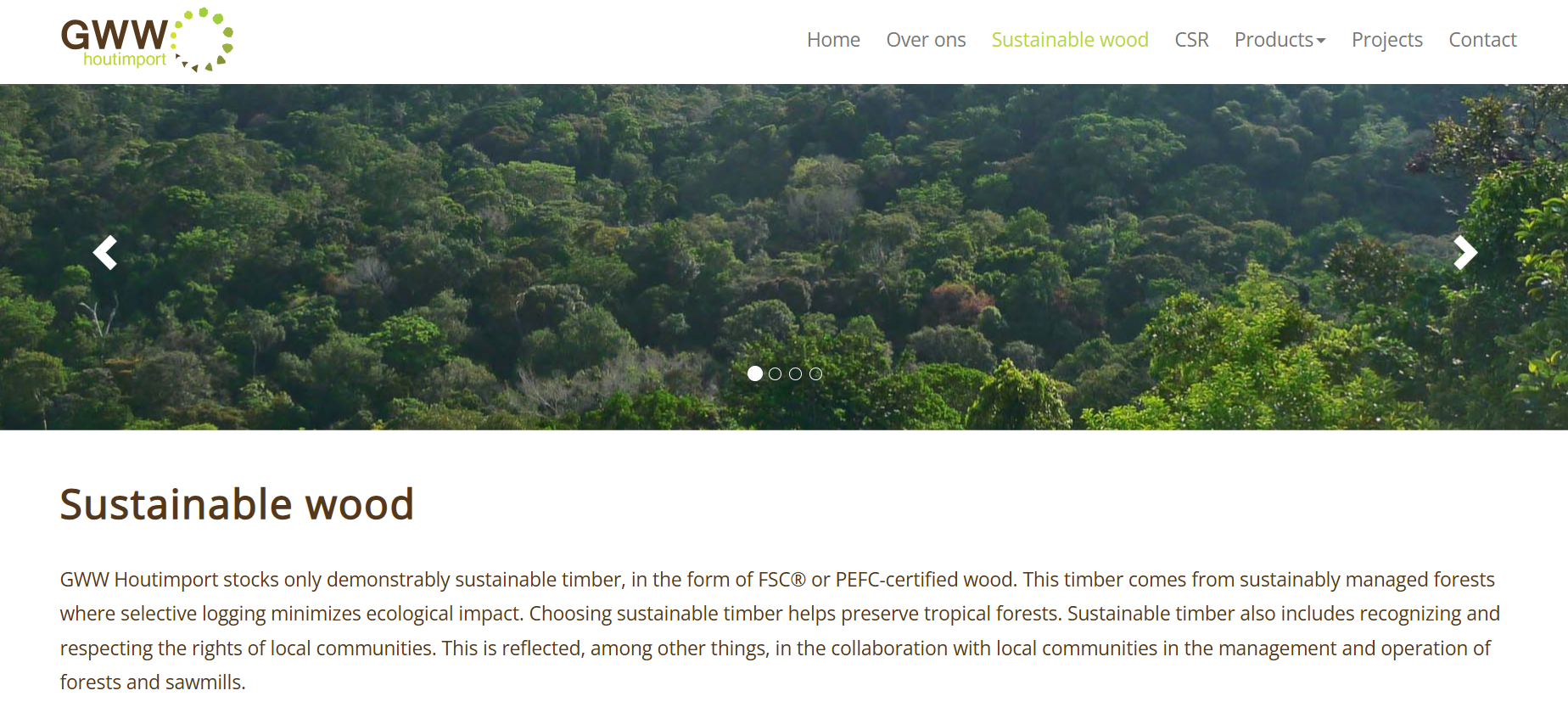
Screenshot from GWW Houtimport’s website, stating that the company stocks only FSC- or PEFC-certified timber. Samise’s FSC certificate had been suspended, and is not PEFC-certified. GWW imported 787m3 of Samise’s wood from Greenex in Sept 2023
EU laws
Imaflora’s slow response to Samise’s infractions underscores why the FSC label cannot be relied upon as a guarantee of legality. Without strong enforcement of EU laws intended to rid the EU market of illegal timber, European consumers will remain in the dark about the legality of the wood under their feet.
A major flaw in the implementation and enforcement of the EUTR has been companies’ overreliance on certification to comply with the law. Earthsight’s investigations have exposed illegal timber with green labels entering the EU not only from Brazil, but from countries across the globe, including Belarus and Russia. Importers had implemented inadequate mitigation measures despite identifying the timber as high-risk, relying instead on certification schemes such as FSC and PEFC.
This was clearly laid out in a conversation between our investigators and a representative from a Dutch company importing Samise timber from Greenex. Over the past four years, the company has significantly reduced its imports of non-FSC timber as a means to cut down on due diligence workload, suggesting certification is seen to equate to or surpass EUTR requirements.
In 2019, the European Commission EUTR/FLEGT Expert Group, which coordinates Member State policies on illegal timber, published a document highlighting that high-value timber species such as angelim vermelho are often associated with incorrect or unreliable data in management plans. This includes overestimated tree densities or even the inclusion of fictitious trees to facilitate illegal logging and timber laundering. To mitigate these risks, the group recommends that companies should seek independent third-party verification and avoid areas or companies embargoed by Ibama, or those with a track record of criminal activities.
The EU Parliament building in Brussels, Belgium. 2025 © Earthsight
The EU Deforestation Regulation (EUDR), adopted in June 2023 and initially scheduled to be enforced from 30 December 2024 but which will now be enforced from December 2026, was designed in part with EUTR’s weaknesses in mind. Besides requiring that timber products placed on the EU market be both deforestation-free and legally produced, the EUDR sets out minimum levels of enforcement checks and requires authorities to consider specific risks when carrying them out. This includes the complexity and length of supply chains, whether products have been mixed or processed, the proximity of the plots of land to forests, the country-level risk classification and the history of non-compliance by the company.
The Samise case illustrates why it is important to go beyond checking that imports are accompanied by formal permits or certification. Where suppliers operate in high-risk regions or have been linked to court convictions, suspensions or credible allegations of wrongdoing, buyers should actively look into the wider context and consider local judicial decisions, official enforcement records, NGO investigations and other available sources before concluding that the risk is negligible. Enforcement authorities in Europe, for their part, should encourage companies to undertake this wider assessment and apply this deeper level of scrutiny to ensure meaningful implementation of the law.
Some industry groups in Europe have called for third-party certification to play a more formal role in EUDR compliance and enforcement. While the EU Commission has not created a ‘green lane’ for certified products, on 4 May 2026, the Commission announced it would be setting up a repository of certification schemes applicable to EUDR-relevant commodities. This will be an information resource for companies and enforcement authorities.
The Dutch enforcement authority, the Nederlandse Voedsel en Warenautoriteit (NVWA), encourages businesses to use private control systems, including certification schemes, to self-monitor compliance with a range of laws. The authority is in the process of assessing several schemes – including FSC – to identify if they can be used to demonstrate compliance with parts of the EUDR.
The findings of this investigation suggest the EU Commission, NVWA and other enforcement authorities should clearly emphasise the need for businesses to do their own due diligence and not rely on certification schemes. They should also avoid establishing any formal mechanisms to recognise certified products.
This report adds to a mountain of evidence that for the EUDR to fulfil its potential in reducing deforestation and forest degradation, companies and enforcement authorities must heed the lessons learned from the EUTR’s poor enforcement, and ensure due diligence goes beyond surface-level checks.
Extracting timber in Brazil’s national forests
Drone footage of the Amazon rainforest, Brazil © Open Planet
Reducing deforestation in the Amazon has been the flagship environmental policy of President Luiz Inácio Lula da Silva’s third administration. In July 2024, Brazil announced plans to increase forest concessions in federally protected areas in the Amazon.
Underpinning the government’s strategy is the idea that allowing timber companies to log limited areas of federal forests gives them a stake in monitoring and preserving them. The plan aims to expand forest concessions in federal areas by five million hectares – an area larger than Costa Rica. By early 2025, Brazil had 23 forest concession contracts in place in the Amazon, covering around 1.31 million hectares of federal territory.
The programme underwent little debate about the overlooked challenges of Sustainable Forest Management Plans (SFMPs). SFMPs dictate how and when a company may harvest timber, specifying limits related to species, volumes and timeframes, among other criteria. Ibama19 permits logging intensities of up to 30m3 per ha every 25–35 years, but scientific findings call into question the sustainability of these limits. Research shows that 30-year cutting cycles are ecologically incompatible with the natural regeneration dynamics of the Amazon. A truly sustainable model would require lower extraction levels and longer logging cycles – issues that have not been addressed in the government’s plans to expand concessions in federal areas.
Recent research also shows that, over the past two decades, policies that have reduced deforestation in the Brazilian Amazon have largely failed to prevent degradation – where repeated extraction, often in the same areas, chips away at forests’ ecological resilience over time with severe knock-on effects on biodiversity and the climate. Degradation is projected to affect the entire Amazon by 2050, demonstrating the need for strategies that go beyond addressing deforestation alone.
Brazil’s plans to expand federal concessions also ignore the challenges of effectively monitoring these areas. The issues identified in Samise’s concession in Saracá-Taquera underline wider concerns about how a programme intended to preserve the Amazon could instead end up accelerating its destruction. With oversight of the 23 existing contracts already proving difficult, Brazil’s ability to monitor and control its federal concession area, set to triple in size, is called into question. Cases like this one risk becoming a classic example of a plan backfiring.
Key recommendations
For the European Commission
- Alert all EUTR Competent Authorities to the findings of this report, highlighting not only the risks linked to the specific supply chains identified, but also broader concerns regarding timber imports from the state of Pará. If not already done, analyse the technical note published by the State of Pará Public Prosecutor's Office, which highlights weaknesses in timber traceability in the state.
- Monitor and verify that appropriate action is taken by the Dutch EUTR Competent Authority, both in relation to Samise specifically and imports from Pará more broadly, ensuring that such action is consistent with discussions held within the EUTR/FLEGTR working group on timber imports from Brazil, including those recorded in the 21st and 25th meetings.
- Undertake a comprehensive review of Member States' exposure to high-risk Brazilian timber, particularly that originating from Pará, and the measures taken by Competent Authorities to detect illegality within EU supply chains containing this timber.
- Include in future guidance on compliance with the EUDR legality requirement that Brazilian government documentation, such as timber transport permits (DOFs), and parallel state systems cannot be considered sufficient to reduce the risk of illegality to a negligible level.
- Maintain the Commission's current position on the role of certification schemes in the enforcement of the EUDR, ensuring that guidance does not encourage the use of certification as evidence of compliance with the regulation.
- Ensure the EU Deforestation Regulation is applied from January 2027 without any further delays or dilution of its requirements, or product scope. Focus Commission resources on supporting Member States and Competent Authorities in preparing for the regulation's enforcement.
For the Dutch Competent Authority
- Carry out urgent checks on the compliance of importers in the Netherlands purchasing timber from Greenex and Samise. Ensure that where operators are unable to adequately mitigate risks, or where the risk of illegality remains non-negligible, they refrain from placing the relevant timber on the EU market or remove it in cases where it is already available.
- Where non-compliance with the EUTR is identified, pursue appropriate enforcement actions, including fines or other sanctions.
- Ensure certification by FSC or other schemes is not interpreted as evidence of compliance with either the EUTR or the upcoming EUDR. Where certification schemes are in use, assess the comprehensiveness and any limitations of these schemes, and require additional evidence from companies to verify this information.
For the Forest Stewardship Council (FSC)
- Introduce requirements for auditing bodies to continuously monitor suspensions of certificate holders' federal concessions imposed by all relevant Brazilian authorities, outside of scheduled audits, to shift the responsibility for reporting suspensions from the certificate holder. This should include enforcement actions taken by ICMBio, SFB and Ibama.
- Implement a system to alert downstream companies when an upstream supplier in their supply chain has had its FSC certificate suspended.
- Take additional steps and measures to address systemic failures in FSC's standard and procedures, as laid out by the 2021 letter signed by Earthsight and 31 other civil society organisations.
- Reverse the existing burden of proof within FSC audits, whereby action to terminate a timber company's certificate in relation to illegality is taken only once convictions have been secured. Instead, where formal accusations of illegality have been made by authorities against a certified company, place the onus on that company to prove its operations are legal, and suspend its FSC certificate in the meantime.
- Avoid relying solely on document-based verification and incorporate on-site visits into due diligence processes, in addition to reviews of penalties imposed by enforcement authorities, court cases, NGO reports and community complaints. Ensure that any independent third-party verification used to assess risk of illegality prioritises proven methodologies, such as the one approved by IBAMA/EMBRAPA, and that third-party verification is complemented by further mitigation measures, as recommended in the conclusions of the 25th meeting of the EUTR/FLEGT working group.
- Consider suspending purchases of Brazilian tropical timber and associated products until adequate checks and risk mitigation can be ensured.
- Avoid relying on flawed certification schemes such as FSC as proof of legality, and ensure compliance with the EUTR, as well as the upcoming EUDR, and relevant US legislation through comprehensive due diligence.
For the Brazilian government
- The Brazilian Forest Service (SFB) should conduct a thorough assessment of Samise's operations, taking into account the repeated violations and contractual breaches identified, and determine whether its concession should be terminated. Expand this assessment to other forest concessions, recognising that the violations linked to Samise may not be isolated.
- Develop mechanisms to ensure that companies subject to fines or embargoes are effectively prevented from continuing operations until issues are resolved.
- The Brazilian government should review plans to expand forest concessions in federally protected areas by five million hectares, ensuring that sufficient investment is first made in both Ibama and ICMBio, given their critical role in monitoring and enforcement.
- While discussing the expansion of forest concessions, the debate should also incorporate Intact Forest Landscape (IFL) metrics in order to prevent ecosystem fragmentation and safeguard the integrity of primary forests.
- Ensure that local communities are recognised and meaningfully consulted in decisions concerning their traditional lands or affecting their livelihoods, and address the concerns and demands raised by communities regarding timber concessions.
- Initiate a public debate on the sustainability of Brazil's current forest concession regulations, taking into account recent scientific findings showing that existing extraction levels are ecologically unsustainable and incompatible with the natural regeneration dynamics of the Amazon.