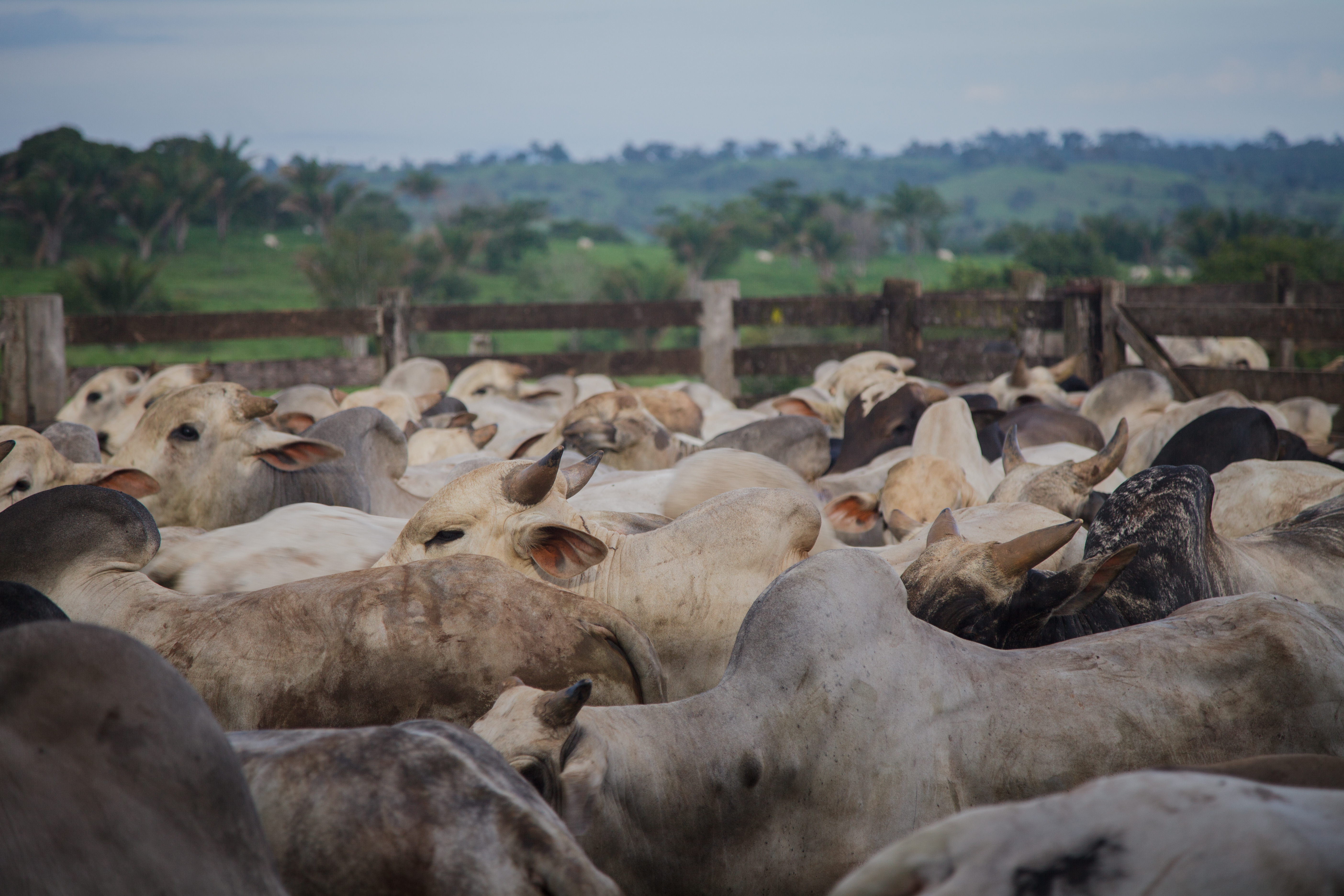
Livestock in the Amazon, December 2019
- The risk that EU beef is linked to Amazon deforestation through its Brazilian imports has increased dramatically. From 2024 to 2025, the number of slaughterhouses in the biome authorised to export beef to Europe nearly doubled. Meanwhile export data analysed by Earthsight shows EU imports from Mato Grosso state, where these slaughterhouses are located, increased by almost half
- Earthsight has uncovered how the EU’s exposure to Amazon deforestation goes beyond its imports from Mato Grosso. During 2024 and 2025, five Brazilian states exporting beef to the EU received over 1.2 million cattle from Pará – an Amazon state with the highest levels of forest loss in Brazil. From 2001 to 2024, Pará lost an area of rainforest more than twice the size of Portugal
- The EU Deforestation Regulation (EUDR) seeks to rid the EU market of products resulting from deforestation, but has come up against relentless backlash and repeated delays to its enforcement. The EUDR must be enforced with no further changes or delays to combat the EU’s rising exposure to Amazon deforestation
Data analysed by Earthsight reveals the increasing exposure of the EU’s imports of Brazilian beef to Amazon deforestation. With the recently signed EU-Mercosur trade deal promising to increase flows of cattle products from Brazil, the EU Deforestation Regulation (EUDR) is key to ensuring this beef does not come with a side of deforestation.
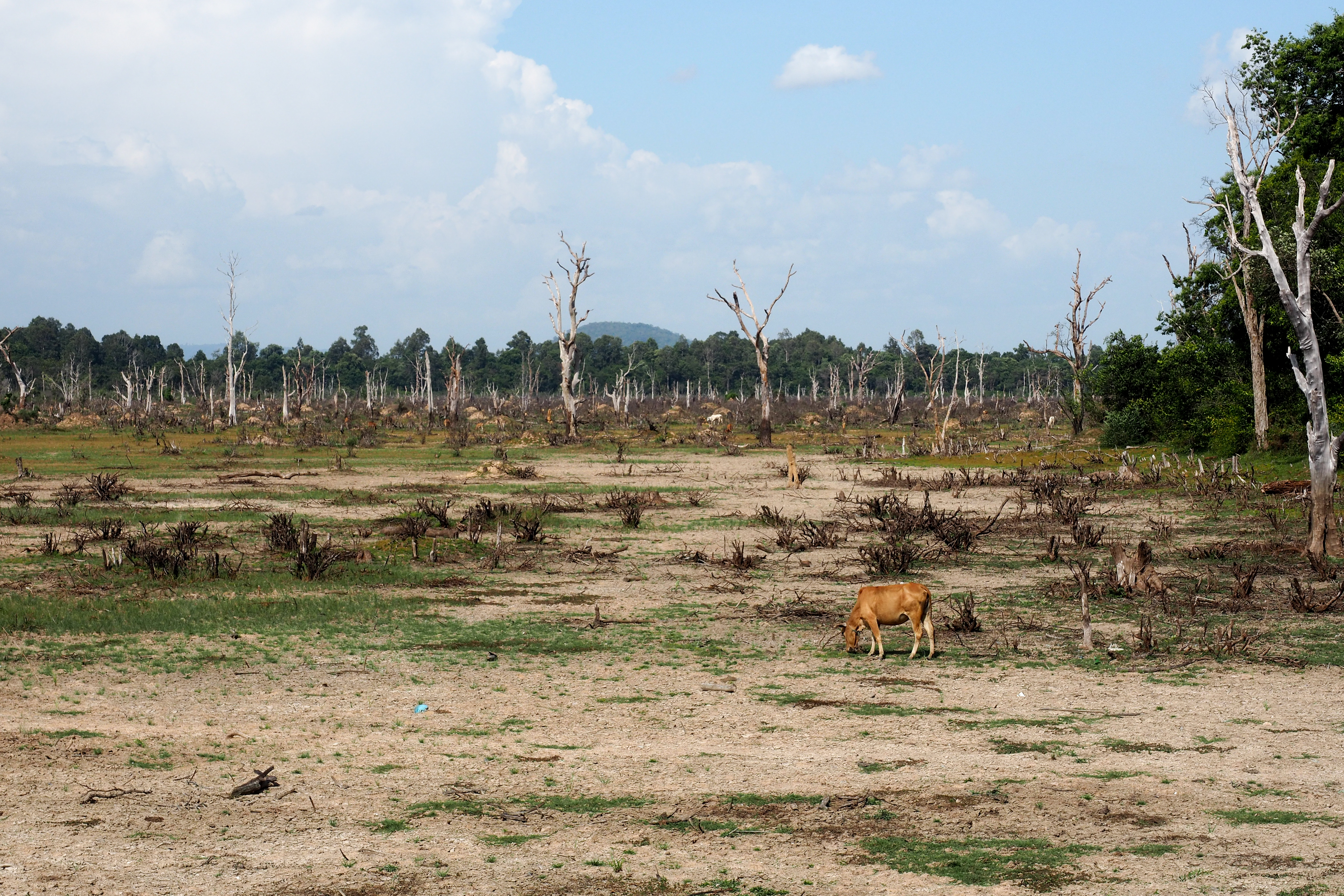
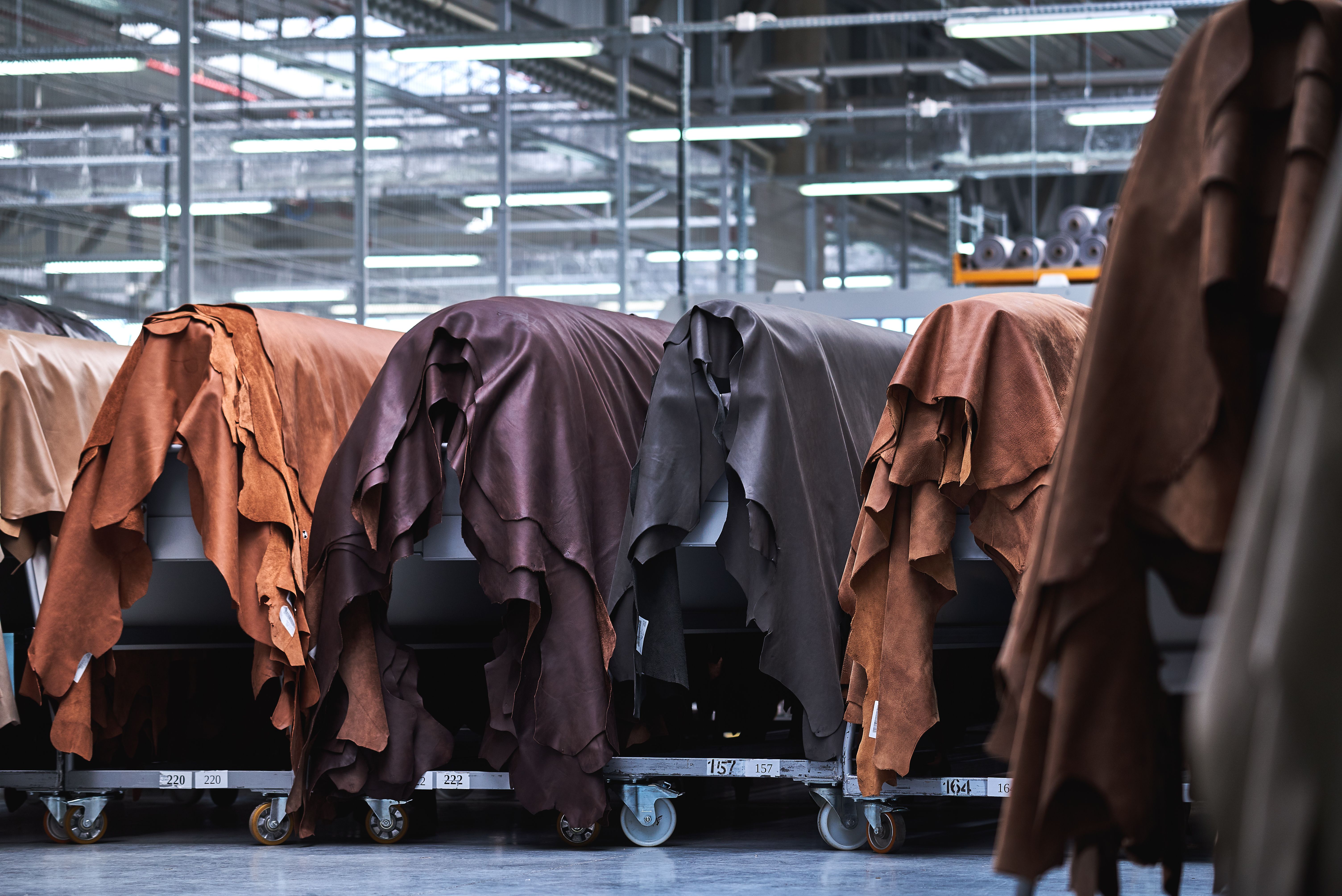
Global consumption of beef and leather have wreaked havoc on the world’s forests. Cattle ranching is the number one driver of tropical deforestation, with new research showing it was responsible for the loss of over 51 million hectares (ha) of forest from 2001 to 2022. Behind this destruction are international supply chains facilitating the flow of thousands of tonnes of cattle products every year to European consumers who remain in the dark about their harm.
In 2024 and 2025, the EU imported over 510 million kilograms of beef from Brazil – roughly 13 times the weight of the Titanic. Due to sanitary requirements, only certain slaughterhouses are authorised to export beef to the EU.
While these are based across Brazil, new research from Imazon, a conservation NGO, shows the number of slaughterhouses in the Brazilian Amazon authorised to export to the EU – all located in Mato Grosso state – nearly doubled in 2025 compared to 2024, from 8 to 15. These facilities have a combined slaughter capacity of 11,250 animals per day.
Export data analysed by Earthsight reveals the EU’s beef imports from Mato Grosso increased by 48 per cent, significantly raising the bloc’s exposure to Amazon deforestation.1
Mato Grosso has the second-highest deforestation rates in Brazil, losing 750,000ha of Amazon forest in 2024 alone. By analysing cattle ranches inside the purchasing zones of slaughterhouses in Mato Grosso authorised to export to the EU, Imazon’s research shows that beef from these facilities is exposed to deforestation risk ranging from 31,000ha to an area almost the size of Belgium (2.8 million hectares).2
Data analysed by Earthsight reveals that it is not just the EU’s imports from Mato Grosso that are at risk of being linked to Amazon deforestation.
Pará, another Amazon state, experienced the highest tree cover loss of all Brazilian states between 2001 and 2024, losing 19 million hectares of forest. While Pará does not directly export beef to the EU, Earthsight's new analysis shows that during 2024 and 2025, five Brazilian states3 that do received over 1.2 million cattle from Pará – an average of 1643 cattle per day. Almost two-thirds came from municipalities with the highest tree cover loss in Pará since 2020, highlighting the EU’s exposure to cattle driving Amazon deforestation.
Without mandatory traceability in cattle supply chains, the true extent of the deforestation linked to Europe’s consumption of beef and leather will remain unknown even to importers themselves.
The EUDR provides a solution by requiring importers of forest-risk commodities, including beef and leather, to prove that they were legally produced and did not originate from land deforested after 2020.
The law was originally set to be enforced from January 2025. However, intense lobbying by parts of industry and opposition by right-leaning policymakers have led to parts of the EUDR being watered down and its enforcement pushed back twice to 2027.
The EU Commission will carry out a ‘simplification review’ of the law in April 2026, providing yet another opportunity for the EUDR to be stripped down.
The industry’s worst offenders have set and missed countless targets to reduce deforestation and improve traceability in their supply chains, but the EUDR is what can turn the tide. Companies and exporting countries alike have finally begun developing cattle traceability systems in response to the law.
It is crucial that the EUDR is defended against any further changes or delays to avoid backsliding on this vital progress, which could prolong Europe’s complicity in global deforestation for years to come.
Notes
1 Cattle in Brazil typically pass through several ranches from birth to slaughter and can travel vast distances between these properties and slaughterhouses. Due to a current lack of transparency, it is therefore not possible to determine that all cattle slaughtered in Mato Grosso were raised in the state. We refer to beef from Mato Grosso as ‘Amazon beef’ because while the state also contains parts of the Pantanal and Cerrado biomes, its entirety is classed as part of the Legal Amazon by the Brazilian government. Several of Mato Grosso’s neighbouring states, from which the state may be receiving cattle, are also part of the Legal Amazon – Pará, Rondônia, Amazonas and Tocantins. Tocantins provides another example of a state classed as the Legal Amazon that also contains part of the Cerrado biome.
2 Imazon’s analysis of slaughterhouses’ exposure to deforestation risk assesses the extent of the area, in hectares, under risk of deforestation within their potential purchasing zones. This is based on the location of slaughterhouses’ direct and indirect suppliers within an approximate 350km radius and does not take into account movements of cattle from other areas. The methodology takes into account information on previously deforested areas, areas under deforestation alert, areas embargoed for illegal deforestation, and deforestation in protected areas.
3 These five states are São Paulo, Mato Grosso, Goiás, Mato Grosso do Sul and Minas Gerais.