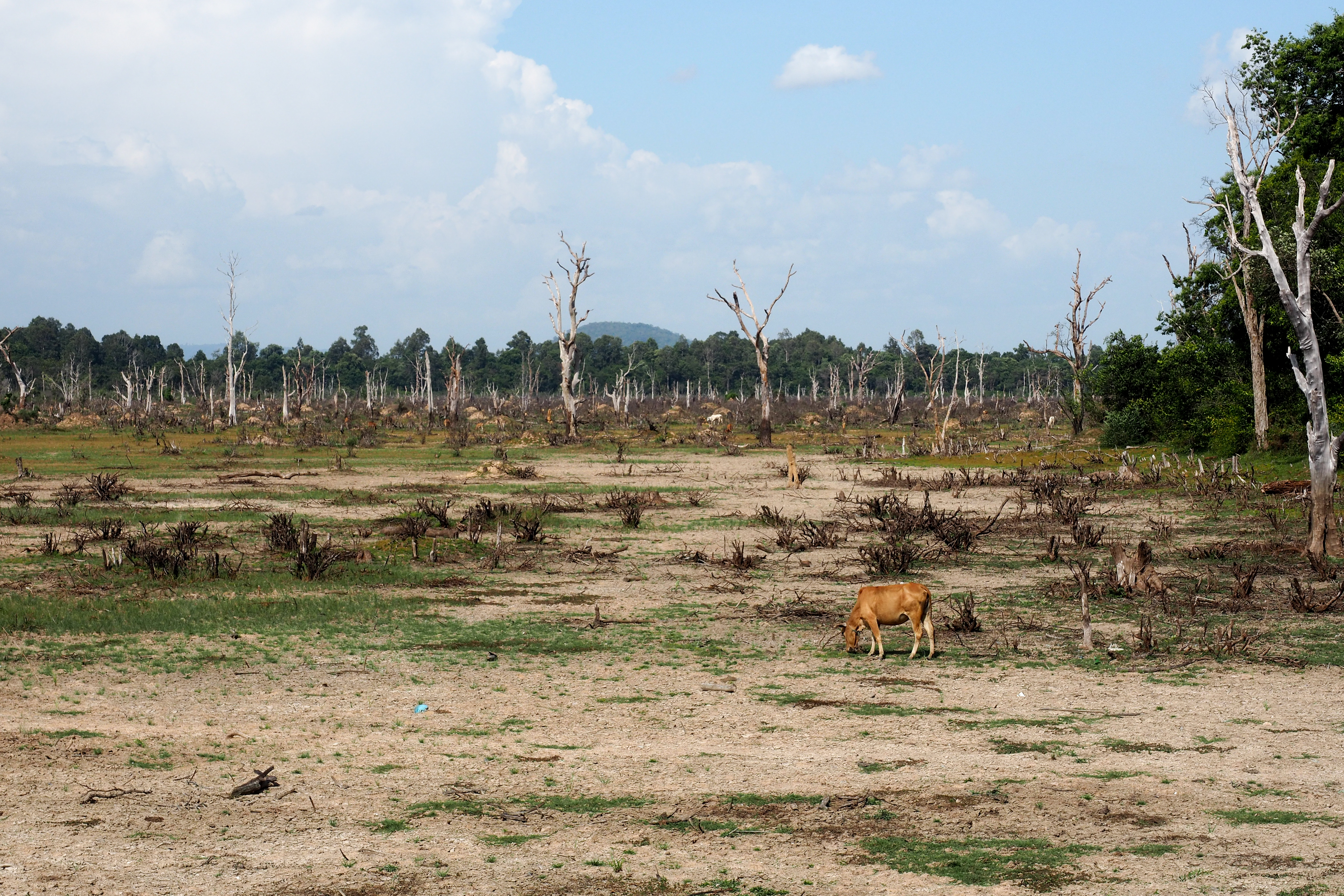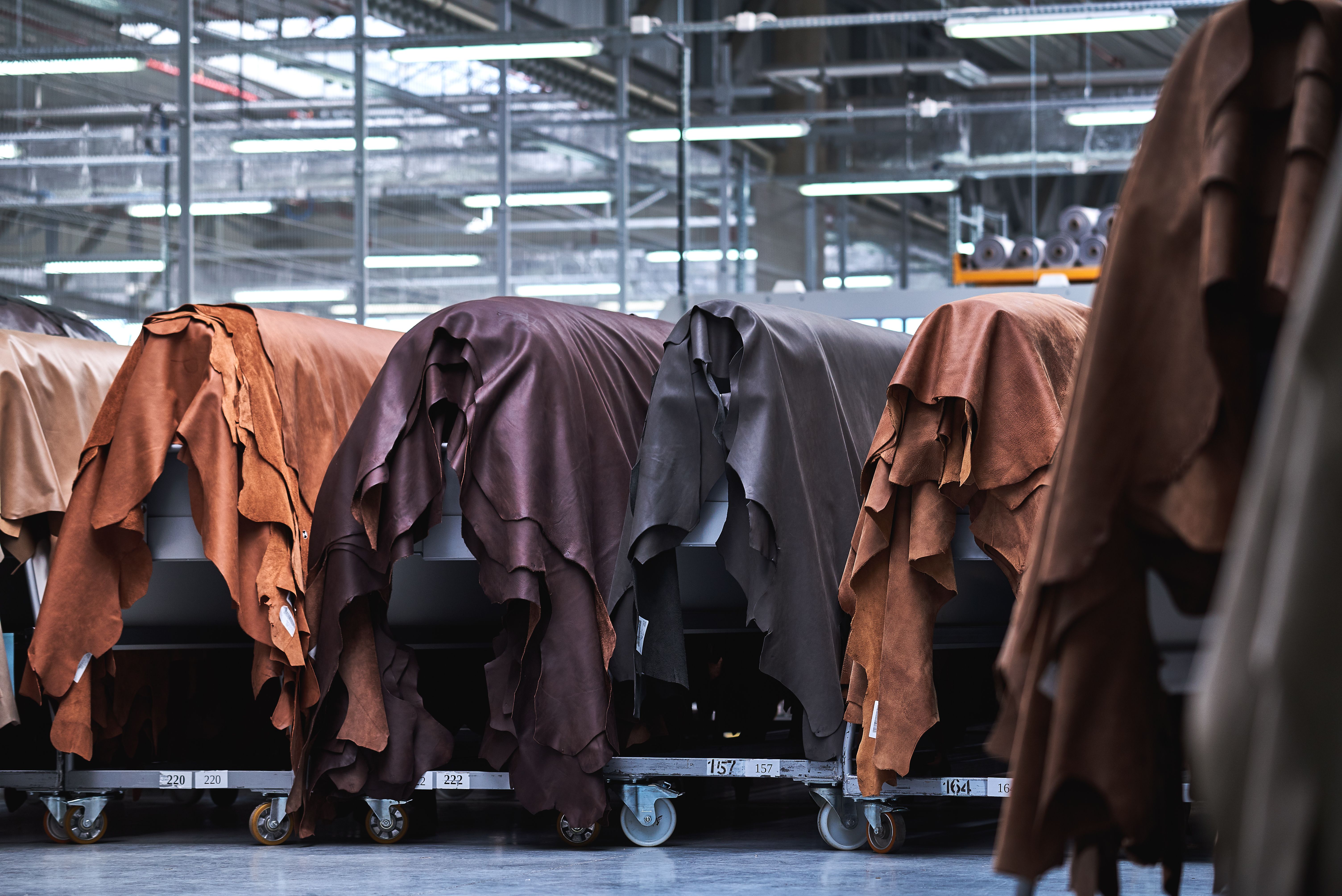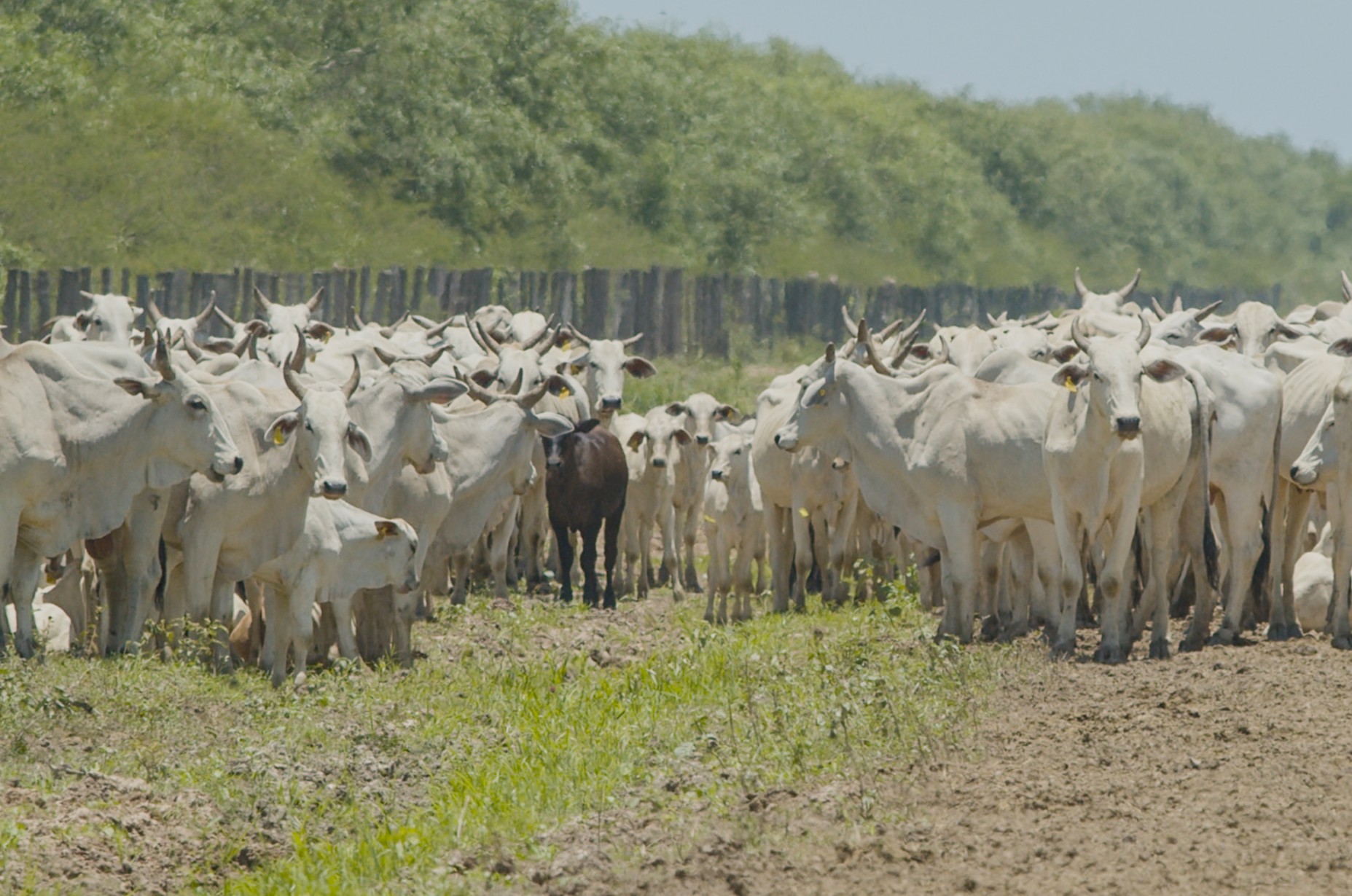
Cattle grazing in the Paraguayan Chaco, 2019
- The European Commission is reportedly considering removing leather from the list of products covered under its Deforestation Regulation (EUDR), a move that would allow leather sourced from cattle reared illegally or on deforested land to continue entering the EU
- This follows persistent lobbying by representatives of the European leather sector. While publicly committing to make leather more traceable and sustainable, sector lobbyists have targeted far-right parliamentarians to remove leather from the law’s scope
- New evidence by Earthsight confirms that leather imported into the EU continues to be linked to deforestation in Brazil and Paraguay. The most recent available data shows that 82 per cent of Italy's Paraguayan leather imports still come from exporters that Earthsight exposed for links to land grabbing and illegal deforestation in 2020
- We found that between 2024 and 2025, seven of the top 10 Brazilian states for tree cover loss exported leather to the EU
- New data also shows that in the same period over one million cattle were transported from Pará – an Amazon state with the highest deforestation rates in Brazil – to key states exporting hides to the EU, increasing the bloc's exposure to deforestation-tainted leather
- Despite this clear evidence of Italian leather’s exposure to forest destruction, the sector falsely claims that leather does not drive deforestation and therefore should not be regulated under the EUDR
- EU policymakers must not yield to industry pressure or be misled by false claims. Voluntary commitments by the sector have not led to meaningful action. Inclusion of leather in the EUDR is needed to ensure EU consumers are not contributing to deforestation and human rights abuses through their leather purchases
Reports suggesting that the European Commission may remove leather from the scope of the EU Deforestation Regulation (EUDR) have triggered concerns among environmental NGOs.1 The proposal follows an intense lobby campaign by the European leather industry.
A wealth of past case studies has shown that the EU’s leather is linked to illegal deforestation and human rights abuses. Investigations by NGOs including Earthsight, Global Witness, Rainforest Foundation Norway and the Environmental Investigation Agency have traced leather used by European fashion and automotive brands to cattle raised on illegally deforested land in the Brazilian Amazon and on stolen Indigenous territory in Paraguay’s Chaco. AidEnvironment has also linked multinational meat company JBS’s leather operations to recent deforestation and potential non-compliance with the EUDR.
New evidence from Earthsight shows that, years after these investigations, the industry has not addressed the risk of deforestation in its supply chain. Our analysis reveals seven of the top 10 Brazilian states for tree cover loss from 2020 to 20242 exported leather to the EU over 2024 and 2025. These states make up almost a fifth of the EU’s total leather imports from Brazil. The EU’s exposure to deforestation through its consumption of Brazilian leather remains high.
This data also shows that leather shipped from the country’s major exporting states could come from cattle born and raised on ranches located in deforestation hotspots in the Amazon.
Despite well-established links between the Italian leather sector and deforestation in both Paraguay and Brazil, trade bodies representing the Italian and European tanning sectors continue to falsely claim that leather is not a driver of deforestation.3 As a result, so the sector argues, it should not be covered by the EUDR.

Report covers of Earthsight's Hidden Price of Luxury (2025) and Grand Theft Chaco (2020) investigations
The push to exclude leather: lobbying in action
Leather sector lobbyists have been working closely with far-right parliamentarians to get leather excluded from the product scope of the EUDR. The regulation, scheduled to come into effect in December 2026, would ban leather linked to illegal activities or post-2020 deforestation from EU markets.
In 2025, the Italian tanning sector’s trade association UNIC held meetings with members of the European Parliament (MEPs) to discuss the regulation’s implications for the Italian leather sector. This included two recorded engagements with Patriots for Europe (PfE) and one with the European Conservatives and Reformists (ECR), both part of the far-right. In comments sent to Earthsight, UNIC stated its interactions with MEPs have gone beyond the far right and included policymakers of all political persuasions.
UNIC's full response can be read here.
But its engagement with the far-right appears to have been most effective. In April 2025, 12 MEPs from ECR, PfE, the far-right Europe of Sovereign Nations Party (ESN) and the centre-right European People’s Party (EPP) submitted a parliamentary question to the Commission parroting the tanning industry arguments about leather and deforestation. The group represented constituencies in Italy, Finland, Czechia, Germany and Romania.
In May, ex-PfE MEP, Roberto Vannacci4, submitted a parliamentary question titled “The need to revise Regulation (EU) 2023/1115 in order to protect the Italian and European leather sector.” Parliamentary records show Vannacci had met with UNIC two months prior and attended an event on the EUDR in Parliament co-hosted by UNIC and its EU-wide counterpart, the Confederation of National Associations of Tanners and Dressers of the European Community (COTANCE).
In November 2025, PfE members proposed an amendment to the law that would remove all leather products from its scope. The amendment won support from far-right parties in parliament but failed due to lack of support from centrist or left parties. The centre-right EPP did not support the amendment, with the exception of a small breakaway group of 15 MEPs, mostly from Italy.
 NI
6
NI
6
 ESN
20
ESN
20
 PfE
81
PfE
81
 ECR
72
ECR
72
 EPP
14
EPP
14
Throughout 2025, COTANCE, which represents the interests of the European tanning industry, held meetings with several Commission directorates general, including Environment (DG ENV), Internal Market (DG GROW) and Employment (DG EMPL). It engaged directly with Commissioner Teresa Ribera and cabinet members of Commissioners Christophe Hansen and Stéphane Séjourné. COTANCE representatives met members of the EPP on three recorded occasions that year and have continued such engagements into 2026, with a March meeting explicitly focused on “the opportunity of excluding hides, skins and leather from Annex I (scope) through the corresponding Delegated Act currently under preparation by the European Commission.”
Individual tanneries were also mobilised to lobby the Commission. In May 2025, La Conceria, an online leather industry publication, put out a call asking sector participants to submit responses to the public consultation on Annex I of the EUDR, advocating for the removal of leather. Forty-eight companies and trade associations lodged submissions arguing for leather to be removed from the law.
The leather lobbyists have also targeted the Italian government. In June 2025, UNIC met Italy’s foreign minister and deputy prime minister Antonio Tajani to raise concerns about what it described as disproportionate regulatory burdens on the national tanning sector. That same month, Tajani wrote to the European Commission urging the exclusion of leather from the EUDR’s scope.
There are now worrying signs the Commission may be susceptible to this sustained lobby effort. In January 2026, news outlets reported that Commissioner Roswall had been considering changes to the EUDR product scope, including relating to leather.5
When approached for comments, COTANCE said that it is not against the EUDR and that its actions demonstrate support for the regulation’s aims.
European leather still tied to deforestation
Removing leather from the EUDR would mean that the regulation no longer applies to a commodity that has been proven to be a clear driver of deforestation.
In 2020, Earthsight traced leather produced on stolen Indigenous land in the Paraguayan Chaco to the seats of Europe’s luxury cars. Earthsight investigators have now analysed the most recent available data and found that Italy is still the world's top destination for Paraguayan leather, receiving over half of the country's global exports of hides and 99 per cent of those sent to the EU.6 Between January 2025 and February 2026, 82 per cent of these imports, valued at over $12 million, came from companies exposed in our 2020 investigation.
Meanwhile Europe continues to import leather from cattle reared in the Brazilian Amazon. The Amazon state of Pará, home to the country’s second-largest cattle herd, has had the worst deforestation rates of all Brazilian states since 2001. It lost 18.6 million hectares of rainforest between 2001 and 2024 – an area almost twice the size of Portugal. Cattle ranching has been the number-one driver, frequently fuelling conflict and human rights violations, and encroaching on Indigenous lands.
Last year, we exposed how the supply chains of leading Italian tanneries supplying American fashion house Coach were linked to cattle ranching on illegally deforested land in Pará, including within the Apyterewa Indigenous Territory.
Pará exported 2589 tonnes of leather to the EU in 2024 and 2025.
Leather exports from other states may also be driving deforestation in Para, as cattle in Brazil are commonly moved between several farms before slaughter.
By analysing thousands of shipment records and data on Brazil’s cattle sector, Earthsight found that from 2024 to 2025, four states7 responsible for 39 per cent of the EU’s leather imports from Brazil together received over 1.17 million heads of cattle from Pará. The hides from these cattle would be sufficient to supply over 50 per cent of the 66,858 tonnes of leather that these states exported to the EU during this time8 – enough to cover 1404 football pitches.9 Almost all of this leather was destined for Italy (80 per cent) – the centre of the European tanning industry. With there currently being no requirement for EU leather companies to trace the origins of their hides, the scale of the risk that their imports of Brazilian leather are linked to Amazon deforestation is unknown even to the tanneries themselves.
Almost 60 per cent of the cattle these states received from Pará came from municipalities with the highest deforestation rates in the state between 2020 and 2024. São Félix do Xingu provides a striking example. The municipality has the highest deforestation rates in Pará, losing an area of rainforest 20 times the size of Brussels in 2024 alone. Out of the 115,971 cattle leaving São Félix do Xingu, nearly three-quarters were destined for these four leather-exporting states to the EU.
In the case of Mato Grosso, over 80 per cent of cattle received from Pará were from these deforestation hotspots. However, the EU’s exposure to deforestation through leather imports from Mato Grosso extends beyond its purchases of cattle from Pará. It is home to roughly 483,469 km² of the Amazon rainforest as well as Brazil’s largest herd, and follows closely behind Pará in deforestation rates, having lost an area over four times the size of Belgium since 2001. Mato Grosso is Brazil’s fifth-largest exporter of hides to Europe, increasing the EU’s exposure to cattle raised on deforested Amazon land.
The sector has failed to regulate itself
Despite years of investigations exposing deforestation risks in the EU’s leather supply chains, the sector has failed to clean up its act voluntarily. Instead, the industry has relied on lip-service sustainability claims and voluntary certification schemes that fail to address the sector’s link to deforestation.
In its 2020 Social and Environmental Report, COTANCE noted that the tanning sector “pays particular attention to the upstream dynamics” of the supply chain and seeks to collect detailed information on animal rearing, transport and slaughter. It also admitted that such data remains difficult to obtain “in the absence of a regulatory obligation.” The EUDR offers this regulatory obligation, which should provide a welcome mechanism to assist the industry to obtain the information needed.
UNIC has stated that it has “monitored and tested various traceability systems and tools” over the past two decades. As early as 2011, COTANCE coordinated a project to identify tools to increase transparency on the origin of hides. In 2022, it launched the leather traceability cluster, a cross-industry initiative aimed at aligning traceability requirements across the sector.
In comments sent to Earthsight, COTANCE said that its advocacy for excluding leather from the EUDR does not contradict its pledge on traceability.
COTANCE’s full response can be read here.
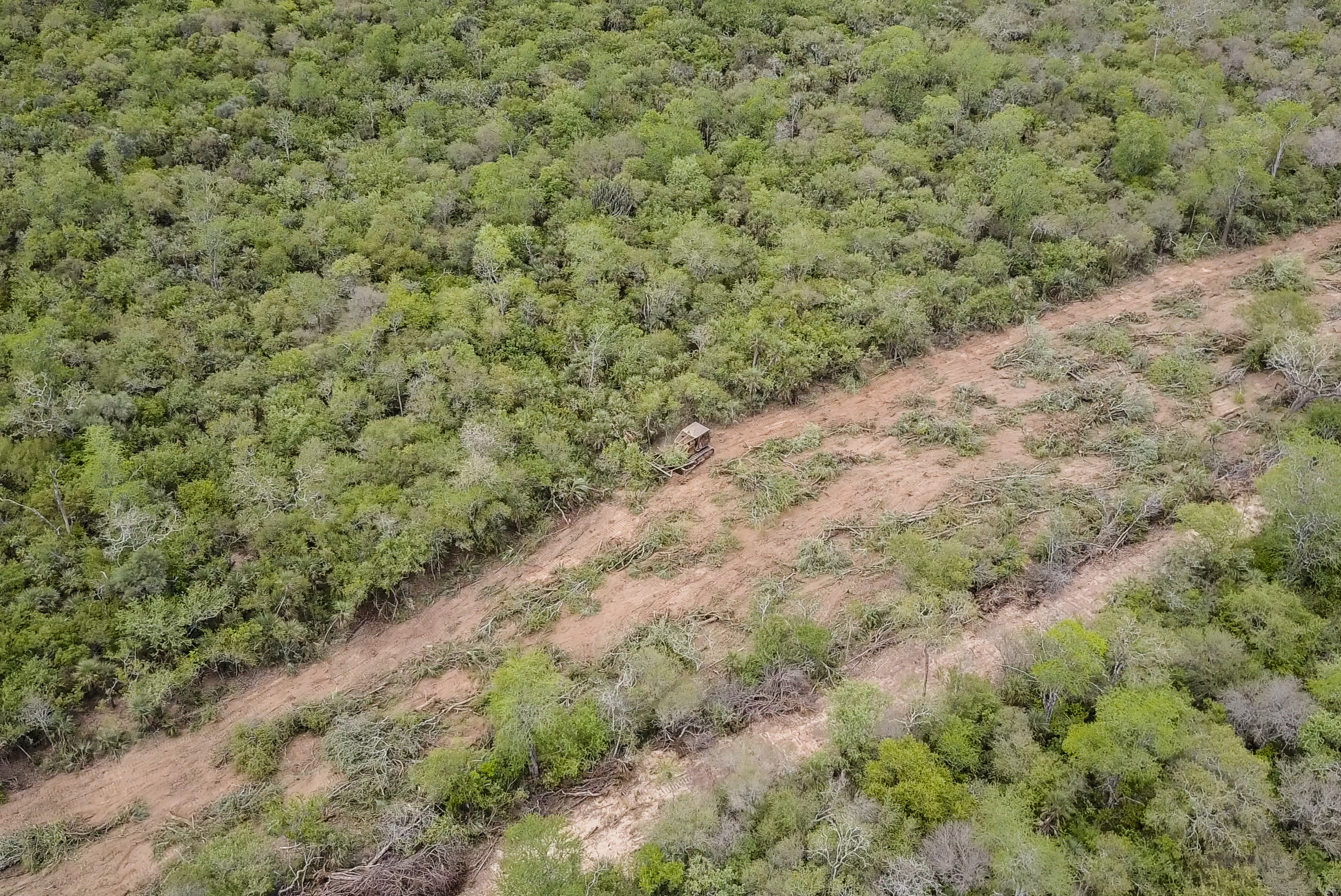
Bulldozer clearing Chaco forest in Paraguay, December 2019
UNIC has claimed that the Italian leather industry is “the most sustainable leather industry in the world,” citing that 78 per cent of its waste is reused or recycled and that most of its electricity comes from renewable sources. This framing ignores the basic fact that bovine leather production cannot exist without cattle and overlooks the environmental impact of the industry’s most important raw material: the hide itself.
A peer-reviewed study looked at how the industry focuses narrowly on environmental improvements and circular economy practices at the leather processing stages rather than the impacts of upstream processing (including cattle rearing and slaughter). These processes accounted for around 85 per cent of the most negative impacts in the cases analysed. The authors described this as “circular washing,” arguing that some in the sector could be misrepresenting their environmental impact.
EU policymakers must stand firm on leather
Debates on the EUDR product scope happening now and over the coming months offer the leather industry another opportunity to push its agenda. EU policymakers must resist further weakening of the regulation and recognise the hypocrisy at the heart of the leather industry’s campaign: publicly claiming to support traceability while trying to exempt themselves from legal traceability obligations.
Policymakers must not be swayed by pretty sustainability claims or empty industry promises. Evidence shows the industry cannot ensure its supply chains are free from deforestation and associated human rights abuses on its own. Inclusion of leather in the EUDR is essential to prevent EU consumers from continuing to drive environmental destruction and human rights violations through their purchases.
References
1 Jacob Weizman, Politico Pro Morning Sustainability newsletter, 21 January 2026: “The Commission is discussing changes to the EU’s deforestation law (EUDR) when it comes to soap and leather, [Environment Commissioner] Roswall said. Any changes would likely come through various implementing acts, which would “hopefully be ready in April,” she said”; Marianne Gros, Politico Pro Morning Sustainability newsletter, 20 February 2026: “A study commissioned by the European Commission on the impact of changing the EU’s deforestation law’s scope floats including instant coffee, footwear and palm oil soaps, according to a person familiar with the report in question. […]Some products — such as some leather-made products — are trickier topics as they are associated with both high environmental impact and high compliance costs. That means decisions on leather goods, many of which are already included in the EUDR’s scope, will have to be a political decision;” Sofia Sanchez Manzanaro, ‘EXCLUSIVE: EU to tweak product list under deforestation rules without reopening text’, Euractiv, 11 February 2026: “The possible exclusion of leather, which some lawmakers in the European Parliament pushed for in December, remains unresolved and would ultimately be a political decision, two industry sources said.”
2 In order of export volumes, these states are: Mato Grosso do Sul, Mato Grosso, Bahia, Minas Gerais, Pará, Rondônia, Maranhão and Amazonas.
4 Since February 2026, MEP Roberto Vannacci has left the PfE group to join the ESN group. https://www.ansa.it/amp/europa/notizie/rubriche/voceeurodeputati/2026/02/03/vannacci-lascia-il-gruppo-dei-patrioti-per-leuropa-al-parlamento-europeo_0732e618-d94c-40ab-b341-d46042d202ff.html
5 See summary of relevant news reports in note 1.
6 Based on shipping data from January 2025 to February 2026, which is the most recent data available.
7 In order of export volumes, these states are: Goiás, Mato Grosso do Sul, São Paulo and Mato Grosso.
8 This is based on the assumption that one hide produced from one cow weighs roughly 30kg. 1.17 million cattle could therefore produce 35,100,000kg / 35,100 tonnes of hides.
9 The figure of 1404 football pitches is based on 66,858.655 tonnes of EU-imported bovine hides. At roughly 30 kg per hide, this equates to 2,228,622 cows (66,858,655kg / 30kg). Each hide covers around 4.5m², giving a total area equivalent to 10.02 million square metres (2,228,622 x 4.5m² ). An average UK football pitch is 7,140m², making the total area enough to cover 1404 football pitches (10,028,799 / 7140).